
A new air conditioner in Florida succeeds or fails on the install, not the badge on the box. The same model can run twelve years or seven, depending on whether it was sized for the house, set level, kept out of the sprinkler spray, and protected from the power flickers this grid delivers every summer. This page is what we check and why — written so you can hold any installer to it, including us.
Opening soon. Sunny City Cooling isn't booking jobs yet — this page is here to help you understand the work first. Join the launch list and we'll email you the day we open.
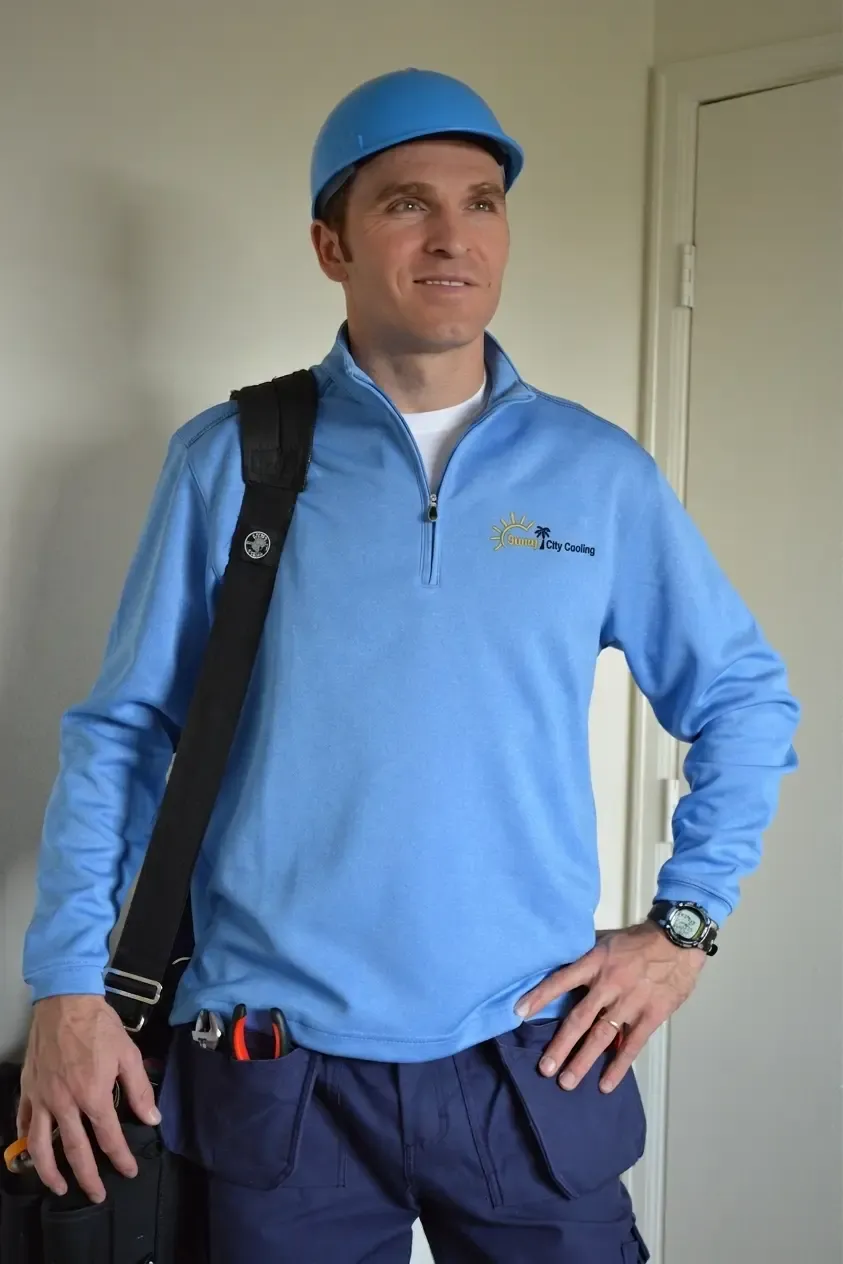
Sunny City Cooling technician — the install decides how long the system lives
Sunny City Cooling · Wesley Chapel, FL · more than 60 years of combined field experience on the team.
How do you know it's time for AC Installation?
Check what you're seeing at home:
What is that noise?
Pick the closest sound. This narrows it before anyone opens a panel.
Classic failed start capacitor. The compressor is trying to start against a dead cap and is heating up. Turning it off protects the expensive part.
Contactor or control board. The system is asking for cooling and the switch is not closing.
Blower or fan motor bearings. It gets louder for weeks, then it stops turning on the hottest day.
Usually loose panel screws or debris on the fan guard. Sometimes a failing fan blade — check before it grinds.
Drain line backing up. In Florida this is the number-one cause of water damage from an AC.
Ductwork flexing as pressure drops. Annoying, not dangerous — usually a sign of undersized returns.
Sizing comes before shopping
Bigger is not better and it is not close. An oversized system cools the thermostat quickly, shuts off, and never runs long enough to pull humidity out of the house. You get a home that is 74°F and clammy, plus short-cycling that wears the compressor.
Proper sizing is a Manual J load calculation: square footage, ceiling height, window area and orientation, insulation, duct location, shading. A 1,500 sq ft Riverview home with modern windows does not need what an identical footprint with 1980s single-pane glass needs.
Sizing from the driveway is a Florida tradition, right up there with pressure-washing the pool cage and arguing about hurricane shutters in July. It is also how a house ends up with a system a full ton too big. Rule of thumb, used only as a sanity check: roughly one ton per 500–600 sq ft in Tampa Bay, adjusted heavily by the factors above. If someone quotes you a size from the driveway, ask what it's based on.
Where the outdoor unit goes matters more than people think
Anatoli, who runs Sunny City Cooling, on the three placement rules he doesn't bend:
Height near water. In South Tampa, if the house is on the water, the condenser goes at about four feet or higher. That's flood protection, and the water-related code zones are the real difference between neighborhoods here — Wesley Chapel, Lutz, Zephyrhills, Dade City, Tampa and South Tampa are not the same job because of that.
Sprinklers. People plant beautifully around the condenser and then irrigate straight into it. The water here is hard. Over time even copper parts start to degrade and crack from it. I recommend it to every customer and I check it at installation: make sure the sprinklers don't hit the unit. Keep it as dry as possible.
Air. Two feet clear on every side and nothing overhanging it that drops leaves into the coil.
| Placement | Effect on the outdoor unit |
|---|---|
| 4 ft or higher near water, dry, 2 ft clearance | Designed service life |
| At grade in a flood-prone zone | One storm surge can end it outright |
| In daily sprinkler spray | Hard-water scaling and early coil corrosion — even on copper |
| Boxed in by hedges or a fence | Runs hot, higher bills, shorter compressor life |
Inverter systems and the vertical-fan condensers
You'll see outdoor units where the fan sits vertically instead of blowing straight up. Those are usually inverter systems, and there are two honest things to say about them.
The good: a vertical condenser fan motor tends to last longer, and inverters run at variable speed instead of slamming between full-on and off. That means steadier temperatures, better humidity control and lower running costs.
The caveat, in the owner's words:
They cost a bit more, they're more economical and they're more durable — provided the house's electrical is sound and there's a good surge protector. They run at four speeds and there's far more electronics inside to protect.
So: if you're buying an inverter, budget for a surge protector at the unit and have someone look honestly at the panel. In a region with this much lightning, that is not an upsell, it's the condition under which the efficiency promise holds.
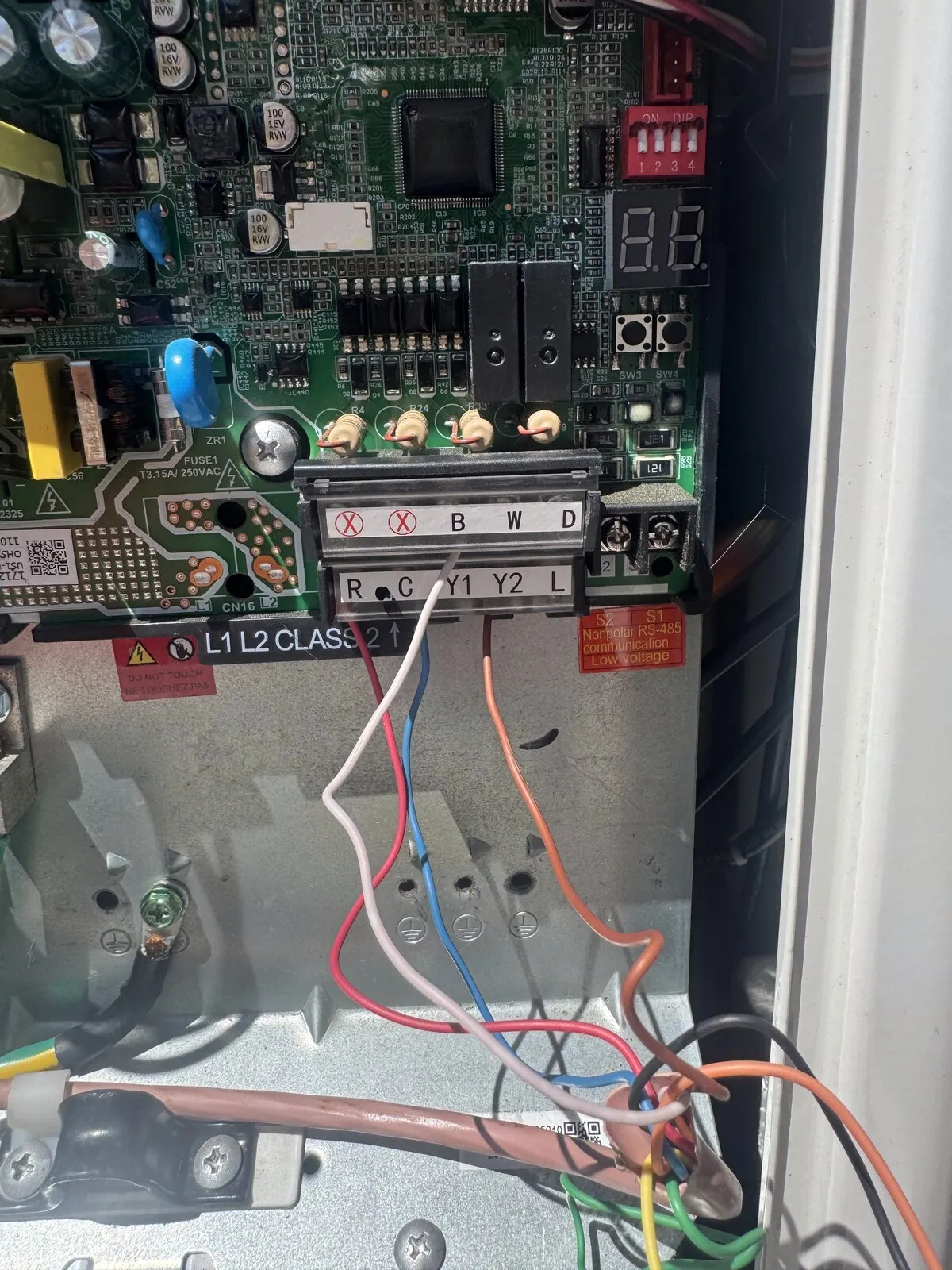
The indoor unit has to be level. Genuinely level.
An air handler that sits even a couple of degrees off doesn't drain. Water pools in the low corner of the pan, biological sludge grows in the standing water, and the drain line clogs — over and over, for years, while somebody keeps getting paid to clear it.
In new Florida construction this happens two ways: it was set out of level at install, or the slab settled afterwards and took the unit with it. A level laid across the cabinet at install takes thirty seconds and prevents a decade of service calls. Ask for it.
Installation quality is what you're really buying
Two technicians can install identical air conditioning equipment in identical houses and hand you systems that behave completely differently. The equipment is a commodity; the installation isn't.
Where installs go wrong, in the order we'd expect to find them: a charge added by gauge pressure instead of weighed in, a line set reused without being properly flushed, an air handler set out of level, a return that was undersized when the house was built and never revisited, and a system sized from the old equipment's label rather than from the house.
Every one of those produces a system that works on day one and generates an AC repair call in year three. None of them is visible to a homeowner after the panels go back on — which is why the questions on this page matter more than the badge on the box.
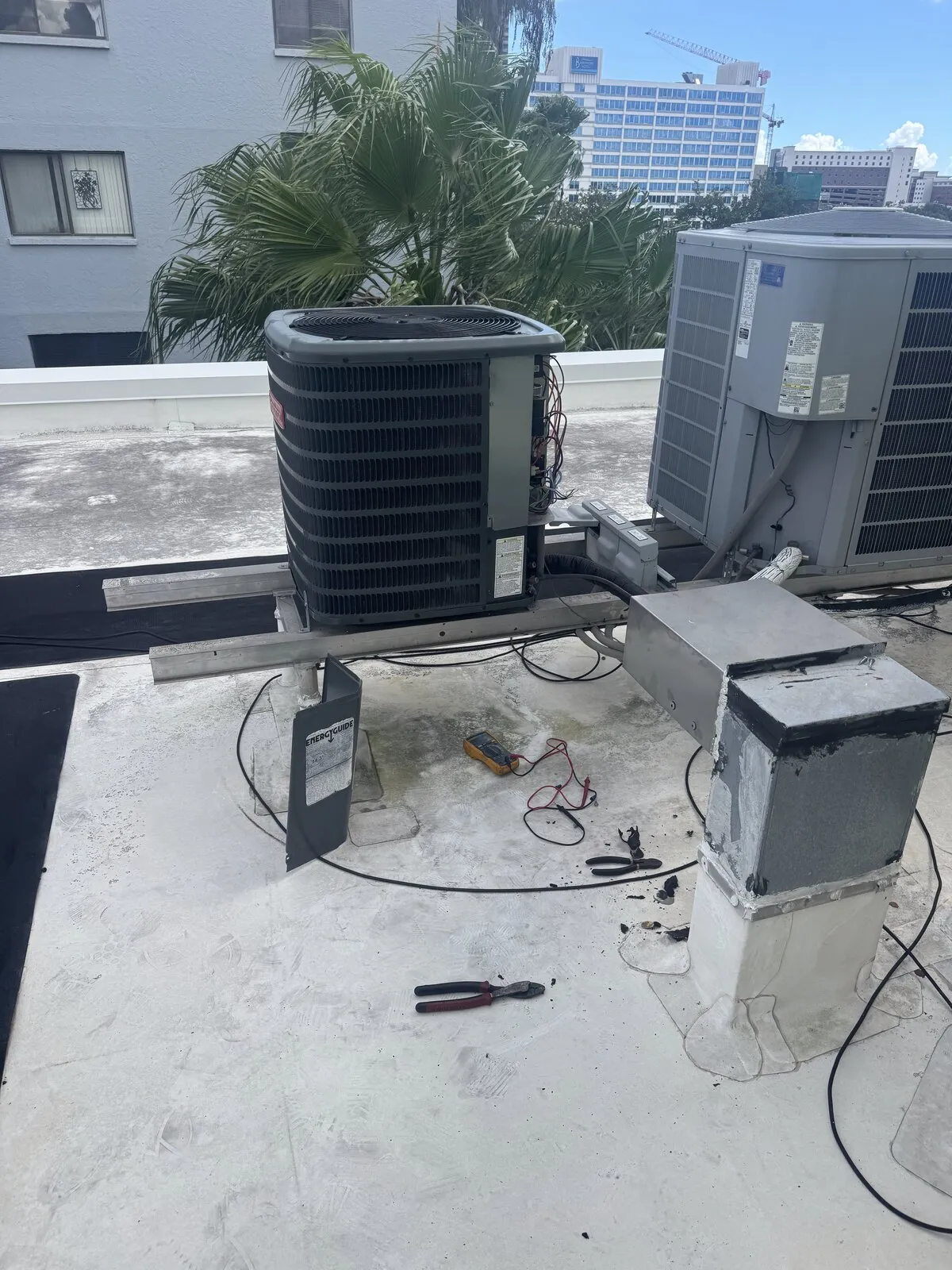
Three honest paths, and picking by need instead of by season
Most Tampa Bay homeowners are choosing between three things:
| Path | Who it suits | What you're buying |
|---|---|---|
| Mini-split | 55+ communities, additions, garages, homes where one or two rooms are the problem | Room-by-room control, lower running cost, and usually a lower up-front cost than installing central cooling where none exists |
| A system built to last 10+ years | Owners staying put | Better coil material and build quality, higher up-front cost, fewer refrigerant problems later |
| A budget system, 7 years and up | Tight budget now, or a property you don't plan to keep | Lowest cost today, with the aluminium-coil lifespan described in our guides |
We say this plainly because the industry usually doesn't: prices in Florida often swing with the season. Ours won't. Same prices in summer and winter, a published price list, and options you choose by what you need — not by how hot it happened to be the week your system died.
What a proper installation day includes
This is the list our team — more than 60 years of combined installs between them — treats as non-negotiable. It's also a fair list to hand to any other installer.
- Load calculation and equipment selection agreed before anything is ordered
- Permit pulled where the county requires it, and the inspection scheduled
- Old refrigerant recovered legally, old equipment removed
- Duct system assessed — see ductwork — because a new system on leaky ducts delivers a fraction of what you paid for
- New line set or a documented reason the existing one is acceptable
- Pad set, condenser positioned at the right height, clearances verified
- Air handler set level and the condensate line routed with real fall and an access tee
- System evacuated to vacuum and charged by weight, not by guess
- Surge protection discussed, especially on inverter equipment
- Airflow measured and the static pressure checked, not assumed
- Registration of the manufacturer's warranty, done for you, with the paperwork left behind
Where we'll be doing this
Wesley Chapel, Lutz, Land O' Lakes, Zephyrhills, Dade City, New Tampa, South Tampa and the surrounding Pasco and Hillsborough communities.
AC Installation: your questions, answered
What does AC installation cost in Tampa, FL?
It depends on tonnage, efficiency tier, whether ductwork needs work, and access. We publish ranges in our cost guides rather than a single number, and we're not quoting installation work until we open for booking.
What size AC do I need?
The only correct answer comes from a load calculation. As a sanity check, Tampa Bay homes tend to land near one ton per 500–600 sq ft, but insulation, glass and duct location move that a lot.
Do I need a permit to install an AC in Hillsborough or Pasco County?
Yes, replacement and new installation are permitted work in this area, and the permit protects you: it puts a county inspector's eyes on the job.
Do you also handle repair on a system you didn't install?
Yes, when we open. AC repair, maintenance and installation are the same HVAC system and the same skills — and a technician who installs systems tends to be better at diagnosing them, because they know what a correct installation looks like from the inside.
Is a mini-split a real alternative to central air?
For many homes, yes — especially in 55+ communities, where we see people moving away from big central systems toward mini-splits for the control and the running cost, and because putting in a mini-split usually costs less up front than installing central cooling.
Is an inverter system worth it in Florida?
Usually, if your electrical is sound and you install a good surge protector. There's more electronics in an inverter, and this is a lightning state.
What's the best AC brand for Florida?
Our owner's answer: the brand on the box guarantees nothing. Every brand has good and bad models and good and bad production years. Coil material, build quality, correct sizing and the install are what determine how long it runs.
Be first in line when we open in Tampa Bay!
Texts and messages get the fastest replies — leave your contact and you'll hear from us the day booking opens.
(813) 393-7911