
An AC failure in a Florida August is a genuine emergency for infants, older adults, anyone with a heart or respiratory condition, and pets. This page is what to do in the first hour — how to keep the house survivable, what to check before you call anyone, what an emergency call should and shouldn't cost you, and how to tell a real emergency from something that can wait until morning at a normal rate.
Opening soon. Sunny City Cooling isn't booking jobs yet — this page is here to help you understand the work first. Join the launch list and we'll email you the day we open.
Sunny City Cooling technician — the first hour matters more than the first phone call
Sunny City Cooling · Wesley Chapel, FL · more than 60 years of combined field experience on the team.
How do you know it's time for Emergency AC Repair?
Check what you're seeing at home:
What these repairs usually run here
Ranges for Tampa Bay homes, not a quote. A real number needs eyes on your system.
$150–$350
- Part is cheap; the visit is most of it
- Dual-run vs single
- Whether the contactor went with it
$150–$400
- Often replaced together with the capacitor
- Burnt wiring adds labour
- Surge damage upstream
$120–$300
- How far the clog sits
- Whether the pan overflowed into drywall
- Adding a safety float switch
$400–$1100
- ECM vs older PSC motor
- Part availability for the brand
- Whether the wheel is also shot
$900–$2500
- Cased vs uncased
- Refrigerant type — R-22 systems change the maths
- Age of the outdoor unit
$350–$1600
- Where the leak is
- How much refrigerant the system holds
- R-410A vs R-22 pricing
Is this actually an emergency?
Treat it as one if:
- Anyone in the house is over 65, under 1, pregnant, or has a heart or lung condition
- The indoor temperature is above 85°F and climbing
- You smell burning, or see smoke or scorch marks at the air handler or disconnect
- Water is actively running into the ceiling or walls
- There's a burning-electrical smell from the outdoor unit
It can usually wait for normal hours if:
- The house is uncomfortable but stable, and everyone in it is healthy
- The system is cooling weakly rather than not at all
- It's a drain leak you've caught into a bucket
- It's a thermostat that needs batteries, which is more common than anyone admits
That distinction is worth money. After-hours rates are real, and the honest answer is that a lot of night calls could have been morning calls.
Keeping the house survivable while you sort it out
- Close the blinds on the sun side. Solar gain through west-facing glass in a Tampa afternoon is enormous and free to stop.
- Run ceiling fans in occupied rooms only. Fans cool people, not rooms — a fan in an empty room is a small heater.
- Don't run the oven or the dryer. Both dump heat and humidity into the house.
- Set up one cool room. Pick the smallest room on the shaded side, close it, put a portable unit or a box fan with an open window at dusk. Trying to hold the whole house is how people get worn out.
- Hydrate, and check on neighbors. In 55+ communities this is the part that actually matters, and it's the part people skip.
- Watch for heat illness: confusion, stopped sweating, nausea, a racing pulse. That's 911, not an HVAC call.
Check these five things before you call anyone
Ten minutes, free, and it resolves a meaningful share of after-hours calls:
- Thermostat — set to COOL, fan on AUTO, and check the batteries. A dead thermostat looks exactly like a dead air conditioner.
- Breakers — the indoor breaker, the outdoor breaker, and the disconnect box on the wall beside the condenser. Reset once. If it trips again, stop and leave it off; a breaker that trips repeatedly is telling you something.
- Drain pan float switch — if the pan is full, the switch has shut the system off deliberately. Clear the water and the drain, and the system comes back.
- Filter — choked filters freeze coils, and a frozen coil blows warm air.
- Outdoor unit — is the fan turning? Is anything leaning against it? A hum with no spin is usually a capacitor.
If all five check out and the house is still heating up, it's a real call — the AC repair page explains what the visit should include, and the warm-air guide covers the in-between cases.
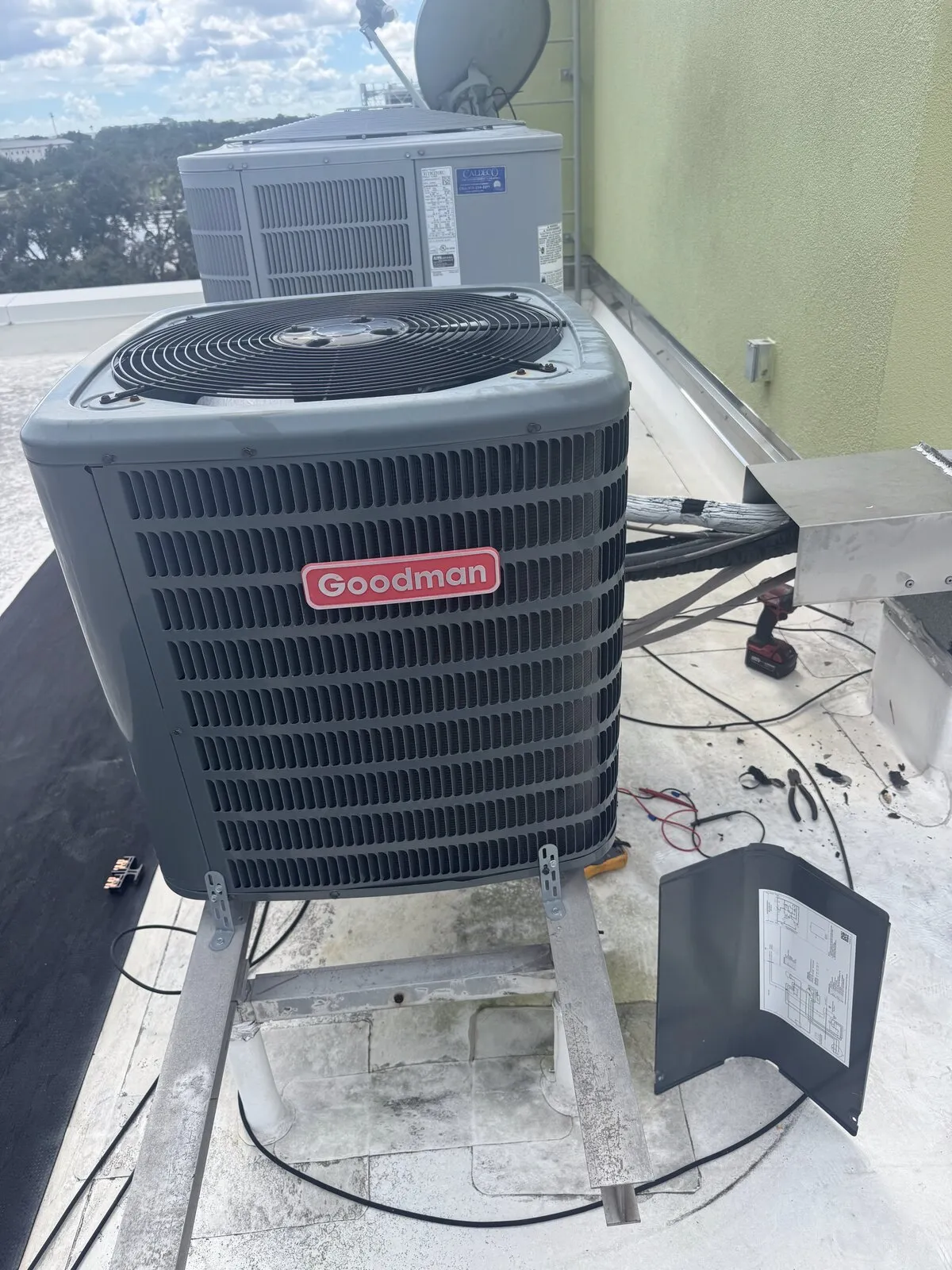
What an emergency call should look like
- A dispatch fee or after-hours rate quoted before anyone is sent, not discovered afterwards
- A diagnosis with measurements, not a verdict
- The option to stabilize tonight and complete the repair at normal rates tomorrow, where that's safe
- No pressure to authorize a full system replacement at 11 p.m.
That last one matters. Late-night replacement decisions are among the most regretted purchases in this trade, right after the treadmill. In more than 60 years of combined experience our team has yet to see an AC system that had to be bought before sunrise. A competent technician can almost always get you through the night or explain honestly why they can't.
What emergency AC repair services cost, and why
After-hours air conditioning repair carries a premium, and the honest reason is simple: somebody is leaving their family at 10 p.m. to drive to your house. What you should insist on is that the emergency service fee is quoted before dispatch, not discovered on the invoice.
Typical structure across AC repair services in the Tampa Bay area:
| Component | What it covers |
|---|---|
| Dispatch or emergency service fee | The trip itself, after hours |
| Diagnostic | Finding the fault, with measurements |
| Repair | Parts and labour, quoted after diagnosis |
A homeowner who asks for all three numbers up front is not being difficult. Any repair service that won't give them is telling you how the rest of the visit will go.
What tends to fail at the worst possible moment
| Failure | Why it happens when it does | Overnight workaround |
|---|---|---|
| Run capacitor | Heat degrades them; they fail on the hottest afternoon | No — but it's a small, fast part |
| Clogged drain + float switch | Pan fills after days of high humidity | Yes — clear the line, system restarts |
| Frozen coil | Dirty filter plus long run times | Yes — fan only, thaw 2–4 hours |
| Tripped breaker | Compressor drawing high amps in heat | Once. Repeatedly means stop |
| Refrigerant leak | Aluminium coil microcracks, usually on an older budget system | No |
| Compressor failure | Endpoint of the above | No |
About lightning, specifically
Tampa Bay takes more lightning than almost anywhere in the United States, and the modern equipment that most rewards a surge protector is exactly the equipment that suffers most without one. Inverter systems run at four speeds with substantially more electronics inside than a single-stage unit. That's where the efficiency comes from — and it's what a nearby strike finds first.
If you own an inverter system and don't know whether it has surge protection at the unit, that's worth resolving on a calm Tuesday rather than during a storm.
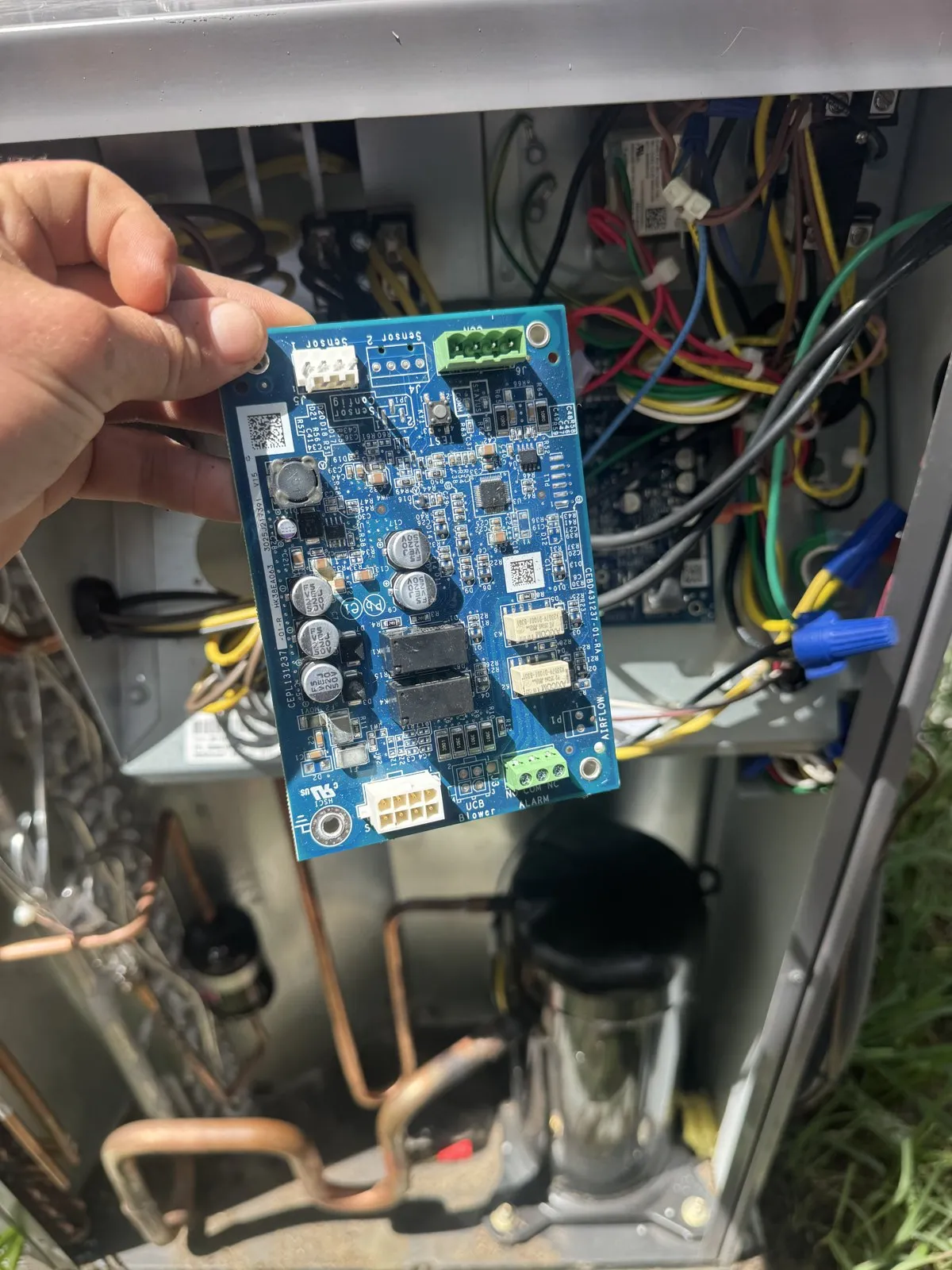
Preventing the 11 p.m. call
Most emergency calls we expect to see are preventable, and the preventive work is unglamorous: change the filter, flush the drain quarterly, keep the condenser clear and dry, have the capacitor measured once a year, and make sure the air handler is level so the drain isn't a recurring event. Four of those five cost nothing.
Which calls genuinely need emergency AC repair, and which need a normal visit
Roughly speaking, an emergency repair buys you speed and costs you a premium. It is worth it when the house is unsafe for the people in it, when water is actively damaging the building, or when there's any sign of electrical burning. It is rarely worth it for a system that still cools weakly, for a drain leak caught in a bucket, or for a thermostat with dead batteries.
Everything else can be a next-morning AC service call at standard rates. That is not us discouraging business — it is the difference between a repair service that works for you and one that works on you.
Where we'll be, when we open
Wesley Chapel, Lutz, Land O' Lakes, Zephyrhills, Dade City, New Tampa, South Tampa and the surrounding areas across Pasco and Hillsborough. Emergency AC repair in Tampa, FL is worth choosing locally for one unromantic reason: drive time is most of the response time.
Emergency AC Repair: your questions, answered
Is a broken AC an emergency in Florida?
For a healthy adult in a stable house, it's an urgent inconvenience. For an infant, an older adult, or anyone with a heart or lung condition, in August, it's a genuine emergency. Judge by who's in the house, not by the thermostat alone.
How much does emergency AC repair cost in Tampa?
After-hours rates carry a premium over daytime service, and the repair cost sits on top. Get the dispatch or after-hours fee quoted before anyone is sent. We don't publish prices until we're booking work.
How long does a landlord have to fix an AC in Florida?
Florida law requires landlords to maintain the property in habitable condition, and the usual process starts with written notice. If you rent, put the request in writing and keep the copy — it changes your options considerably.
What should I do while waiting for a technician?
Close the blinds on the sun side, set up one cool room, skip the oven and dryer, hydrate, and check on anyone vulnerable. Leave a frozen system off with the fan running.
Can I troubleshoot before calling?
Yes, and you should: thermostat and batteries, breakers and outdoor disconnect, drain pan float switch, air filter, outdoor fan. Ten minutes.
What should I have ready when I call?
The brand and approximate age of the system, what it's doing (or not doing), what you already checked, and whether anyone in the house is medically vulnerable. That last one changes the priority, and it should.
Be first in line when we open in Tampa Bay!
Texts and messages get the fastest replies — leave your contact and you'll hear from us the day booking opens.
(813) 393-7911