
If your air conditioner tests perfectly and the house is still uncomfortable, the ductwork is the usual suspect. An air conditioner is a very expensive fan pointed at a hole in your attic, unless the ducts are doing their job. In a Florida home, that ductwork runs through an attic that reaches 130°F on a summer afternoon. Every unsealed seam loses cooled air into that attic and pulls superheated, humid air back into your supply. You can buy a new system and inherit the same problem on day one.
Opening soon. Sunny City Cooling isn't booking jobs yet — this page is here to help you understand the work first. Join the launch list and we'll email you the day we open.

Sunny City Cooling technician — duct assessments start with a static pressure reading
Sunny City Cooling · Wesley Chapel, FL · more than 60 years of combined field experience on the team.
Ductwork services
What ductwork problems cost you in Tampa, FL
Leaky ducts show up in four places at once: your comfort, your energy bills, your indoor air quality, and the working life of the HVAC system itself. A blower fighting a high-static duct system wears out early, and an air conditioning system that can never satisfy the thermostat runs hours it was never meant to run.
Airflow is the measurement behind all four. If the duct system can't move the air the equipment produces, nothing downstream of it works as designed — which is why an airflow check belongs in every duct repair quote in Tampa, FL, before any price appears.
What's in this section
- Duct cleaning — when it's genuinely warranted and when it's being sold to you
- Duct sealing and repair — the work that usually matters more
- Duct replacement — when a system is beyond sealing
The five signs your air ducts need repair
- One or two rooms never get comfortable while the rest of the house is fine.
- The system runs constantly and the equipment itself tests within spec.
- The power bill rose without a change in habits or rates.
- Dust settles quickly after cleaning, especially near registers.
- The house feels humid even when the thermostat is satisfied — a strong sign the system is pulling in attic air, which is also an indoor air quality problem worth measuring if anyone in the house has allergies.
None of those is fixed by a new condenser, which is why duct condition should be assessed before anyone quotes you equipment.
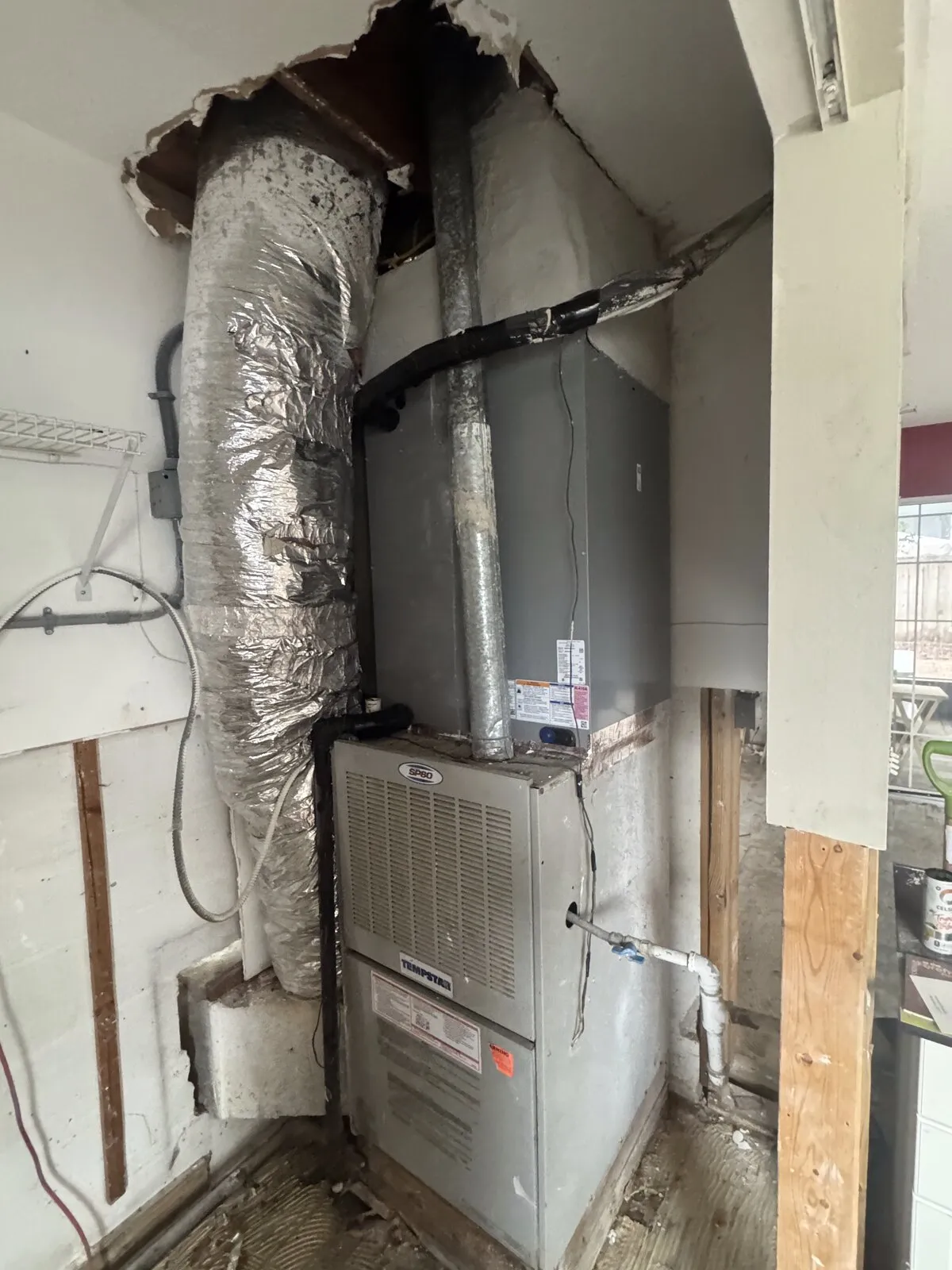
Sealing vs. cleaning vs. replacing
| Work | What it fixes | Typical Tampa Bay case |
|---|---|---|
| Sealing | Lost cooled air, hot humid attic air pulled in, uneven rooms | The most common real need in homes over ~10 years |
| Repair | Separated boots, crushed flex, damaged plenum connections | Very common after attic work of any kind |
| Cleaning | Debris, mold growth, vermin in the ducts | Only when there's an actual sign — see the cleaning page |
| Replacement | Systems too degraded, undersized, or contaminated to save | 20+ year flex duct, or after serious water or mold damage |
An honest contractor will tell you which of those four you need, and will be specific about why. "Your ducts are dirty" is not a diagnosis; it's a photograph.
Flex, sheet metal or duct board: what's in your attic, and what it means
Three duct materials dominate Tampa Bay homes, and each fails in its own way. Knowing which one you have tells you what to expect from a duct repair before anyone climbs the ladder.
| Material | Where you'll find it | How it fails here | Repair outlook |
|---|---|---|---|
| Flexible duct (insulated plastic, wire helix) | Almost every home built after ~1990 | Sagging bellies, torn outer jacket, boots pulled loose, crushed by attic storage | Very repairable; sections are cheap to replace, sealing is straightforward |
| Sheet metal trunks with flex branches | Homes from the 70s–80s, many rebuilds | Leaking seams, failing insulation wrap, rust where condensation sat | Repairable and durable once sealed; worth keeping if the trunk is sound |
| Duct board (rigid fiberglass) | Some 80s–2000s construction | Delaminating, moisture damage, seams opening in attic heat | Often the replacement candidate; hard to seal reliably once it degrades |
The conclusion that matters: age matters less than material and moisture. A 30-year-old sheet metal trunk that stayed dry can outlast a 12-year-old flex run that someone knelt on. Ask what the duct system is made of before anyone tells you it needs replacing.
Same dollars, two directions: duct sealing vs. new equipment
Tampa Bay homeowners routinely spend on a new AC system when the duct system was the actual problem. Here's how the same budget behaves in each direction, in a typical home with 20–30% duct leakage.
| Decision | What changes | Comfort result | Bill result |
|---|---|---|---|
| New high-efficiency AC on leaky ducts | The machine is better; 20–30% of its output still leaks into the attic | The far bedroom is still warm | Improves less than the SEER2 rating promised |
| Seal and repair ducts, keep the working AC | All of the existing capacity reaches the rooms | The far bedroom cools, the house feels less humid | Often the larger single improvement available |
| Seal ducts, then replace equipment when it's time | The new system delivers what you paid for | Best of both | Best of both |
The order is the point. Ducts first, equipment second. Doing it the other way round is how a $9,000 air conditioning system delivers a $4,000 result.
Why Florida attics are unusually hard on ducts
Flex duct is the standard here and it is good material until it's abused. The failure modes we expect to find:
- Long unsupported runs that sag into a belly, where condensation collects
- Boots pulled loose by anyone who's worked in the attic since the install
- Compressed insulation where someone knelt or stored boxes, creating a cold spot that sweats
- Unsealed plenum connections — mastic that was never applied, or foil tape that gave up years ago
- Returns that were never sized properly, so the whole system runs at high static pressure and shortens the blower's life
Duct tape, incidentally, is the one thing that genuinely does not work on ducts. It fails in attic heat. Mastic and foil-backed tape are what hold.
What professional duct repair in Tampa actually looks like on the day
A professional duct repair is quieter and less dramatic than people expect. A technician spends most of it in a tight attic with a headlamp, working along the duct system run by run.
The work itself: reattaching flexible ducts that have pulled off their collars, sealing plenum and sheet metal joints with mastic, replacing sections crushed or torn by earlier work, clearing construction debris left behind by whoever came before, restoring insulation where it has compressed, and adding support straps where a run has sagged into a belly. Then the system runs again and the same measurements are repeated, so you can see what changed.
Two things to ask for before anyone starts. Upfront pricing — a duct repair quoted by the run, in writing, not discovered as the day goes on. And photographs of each repair, because you are paying for work in a space you will never see.
Done properly, the result is immediate and physical: conditioned air actually arriving at the far register instead of warming an attic, cold air where the system intended it, and lower energy costs on the next bill. Duct replacement cost is a different conversation, and an honest contractor will tell you which of the two you're facing before quoting either.
What a real duct repair assessment in Tampa includes
- Static pressure measured at the air handler, not estimated
- Airflow checked at individual registers, not judged by hand
- A visual walk of the full attic run, with photographs
- Supply and return temperatures compared, to quantify what's being lost in transit
- A written summary saying which duct runs need what, and in what order
If you're being quoted duct replacement without a static pressure reading, ask for one. It's a two-minute test and it's the number that tells you whether the duct system is actually fighting the equipment.
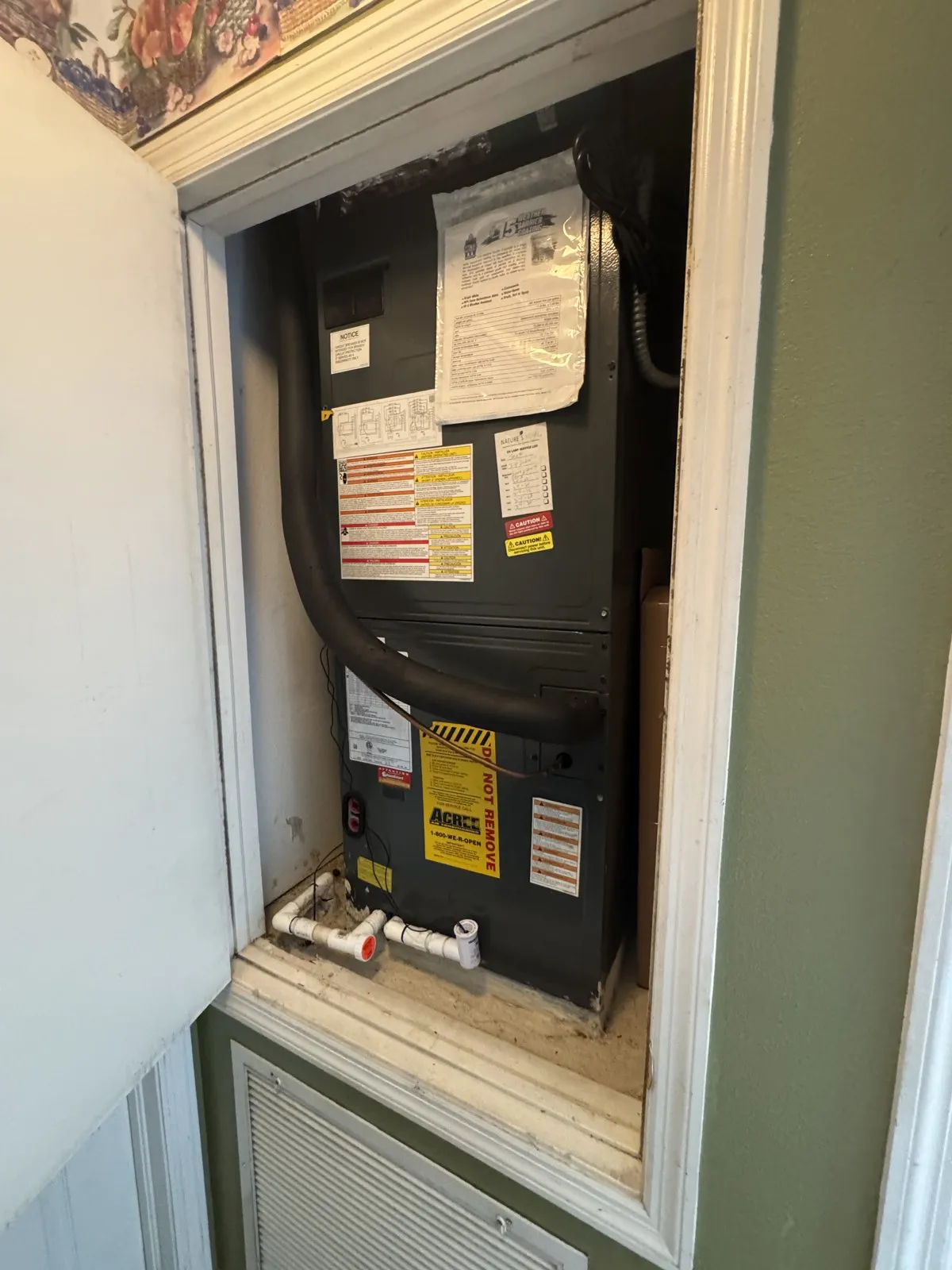
Duct repair, duct replacement cost, and where the line falls
The question every homeowner asks is whether to repair the existing ductwork or install new ductwork throughout. The honest line falls roughly here:
Repair the duct system when the failures are countable — a handful of loose boots, two crushed runs, unsealed plenum joints. Repaired ducts in an otherwise sound system perform like new ones, and the duct repair cost is a fraction of replacement.
Install new air ducts when the flexible ducts are brittle with age, when returns were undersized from the start, when the layout can't deliver air to rooms that have never been comfortable, or when the ductwork has been contaminated by water or mold. Duct replacement cost scales with the number of runs and the attic access, and it is a whole-day job with two technicians.
An expert duct assessment tells you which of those you're in, with the measurements to back it. What it should never be is a verdict delivered from the hallway. Keeping your ducts in good condition is cheaper than replacing them, and any contractor whose only product is new ductwork will find a reason you need it.
Duct repair before a new HVAC system, not after
If you're replacing equipment, the duct assessment belongs in the same conversation. A high-efficiency system on leaky ducts delivers a fraction of what you paid for, and inverter equipment in particular is designed around airflow assumptions that leaky attic ductwork does not honor.
This is the most common way homeowners here get disappointed by an expensive new system: the machine is excellent and the delivery system isn't.
What leaky ducts do to your energy bills and your air quality
Two numbers make the case. A duct system in a Florida attic commonly leaks 20–30% of the air the HVAC system moves. And attic air in July sits near 130°F. Put those together and a leak in the supply side is conditioned air you paid for, escaping into an oven — which shows up directly on your energy bills.
The return side is worse in a different way. A leak there pulls attic air into the system: hot, humid, dusty, and carrying whatever insulation fibers are up there. That is an air quality problem as much as an efficiency one, and no filter placed at the air handler catches what enters downstream of it.
A single separated boot can account for a room that never cools. An air duct that has pulled loose from its collar is not a subtle failure — it's an open pipe blowing into your insulation.
Duct repair needs vary by house age
| Era | What we expect to find in the duct system |
|---|---|
| Pre-1990 | Original sheet metal trunks, failing insulation wrap, undersized returns |
| 1990–2005 | First-generation flexible ducts, now brittle; boots pulled loose |
| 2005–2015 | Better materials, but long unsupported runs and sagging bellies |
| 2015+ | Generally sound — failures here are usually installation shortcuts, not age |
Homeowners across Hillsborough, Pasco and into Pinellas see the same pattern, because the housing stock and the attic conditions are the same.
What more than 60 years of attics teaches you
Between them, the Sunny City Cooling team has spent more than 60 years in Florida attics, and the pattern is stubborn: the equipment is rarely the villain. The most common finding is a duct system that was fine on the day the house was built and has been quietly losing the argument with attic heat ever since. The second most common finding is an attic full of somebody's Christmas decorations resting on a flex duct. We say this with affection. Move the boxes.
Where we'll be working
Wesley Chapel, Lutz, Land O' Lakes, Zephyrhills, Dade City, New Tampa, South Tampa and the surrounding Pasco and Hillsborough communities.
Ductwork in Tampa Bay: your questions, answered
Can ductwork be repaired?
Usually yes. Separated boots, loose plenum connections and short damaged sections are repairs. Whole-system replacement is reserved for degraded, undersized or contaminated systems.
How do I fix leaky ductwork?
Accessible joints are sealed with mastic or foil-backed tape — never duct tape, which fails in attic heat. Aerosol sealing from inside the ducts is an option for systems with many small inaccessible leaks.
Should I replace 20-year-old ductwork?
Often yes, especially flex duct in an attic. Twenty years of Florida heat, UV through soffit vents and foot traffic take a real toll. Have it assessed before assuming either way.
Does homeowners insurance cover duct replacement?
Not for wear and tear. It may cover damage from a covered event, such as a storm or a sudden water release. Document everything before anyone touches it.
How much does air duct repair cost in Tampa, FL?
It scales with how many runs are affected and how accessible the attic is. We publish ranges in our cost guides rather than firm numbers, and we're not quoting work yet.
Does duct sealing lower the power bill?
More reliably than almost anything else you can do to a Florida home short of replacing the equipment. Cooled air leaking into a 130°F attic is money you can measure.
Be first in line when we open in Tampa Bay!
Texts and messages get the fastest replies — leave your contact and you'll hear from us the day booking opens.
(813) 393-7911