
In Florida, almost every indoor air complaint starts as a moisture problem. Mold needs sustained humidity above about 60% to establish. Dust mites want the same range. Musty smells are biological growth somewhere damp. So before anyone sells you a purifier, a UV lamp or a testing package, put a hygrometer in the room that bothers you and read it for a week. That single number decides what to do next.
Opening soon. Sunny City Cooling isn't booking jobs yet — this page is here to help you understand the work first. Join the launch list and we'll email you the day we open.
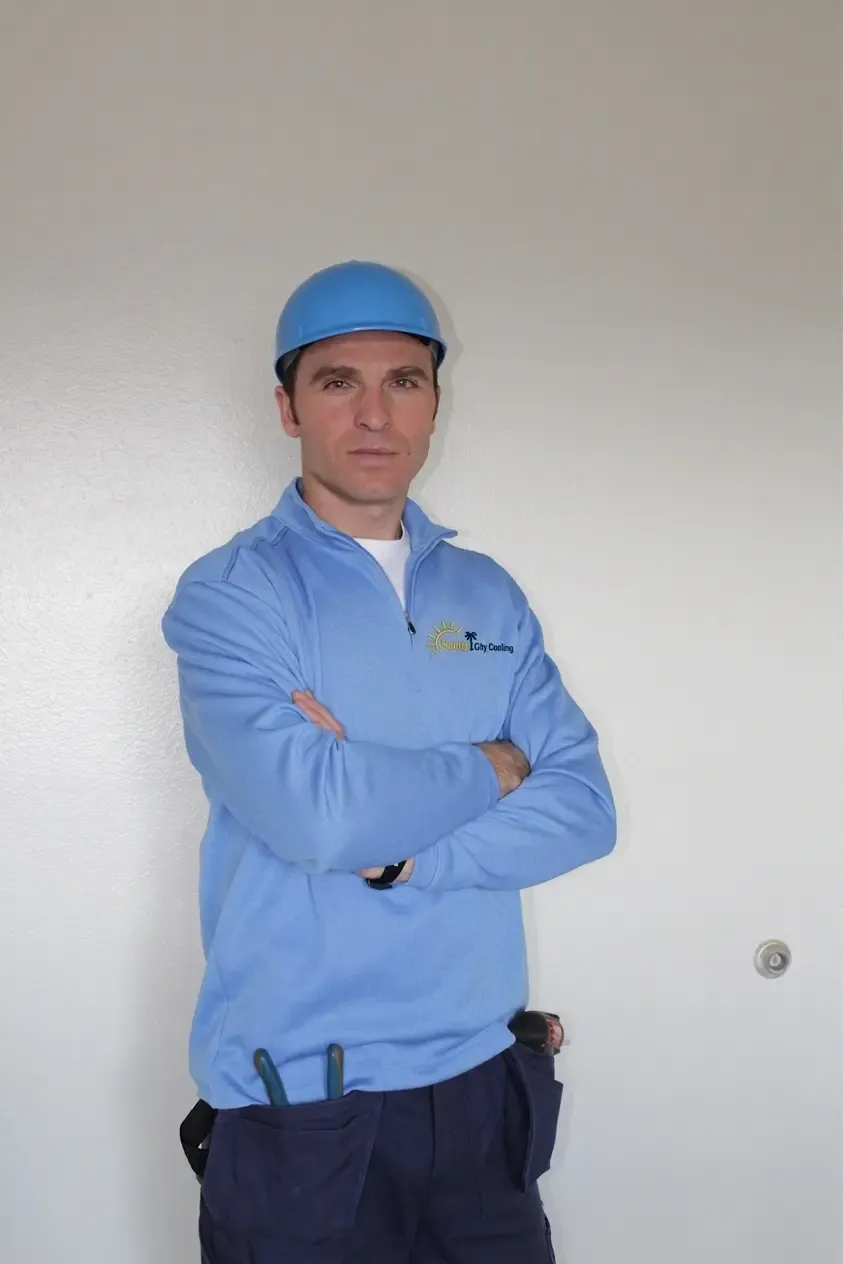
Sunny City Cooling technician — indoor air quality starts with humidity, not gadgets
Sunny City Cooling · Wesley Chapel, FL · more than 60 years of combined field experience on the team.
Indoor Air Quality services
What's in this section
- Air quality testing — what it measures, and when it's worth paying for
- Humidity control and dehumidification
- Filtration — choosing a filter that helps without starving the system
- Ventilation in tightly built newer homes
The number that decides everything
| Indoor relative humidity | What it means for you |
|---|---|
| 30–50% | The target band. Comfortable, and hostile to mold and mites |
| 50–60% | Acceptable. Worth watching in shoulder season |
| Above 60%, sustained | Mold risk. Something is wrong — find it before you buy anything |
A hygrometer costs less than lunch. Buy two. It is the only piece of indoor air quality equipment we will ever tell you to purchase before we've seen the house — and in more than 60 years of combined experience on our team, it has embarrassed more expensive gadgets than we can count.
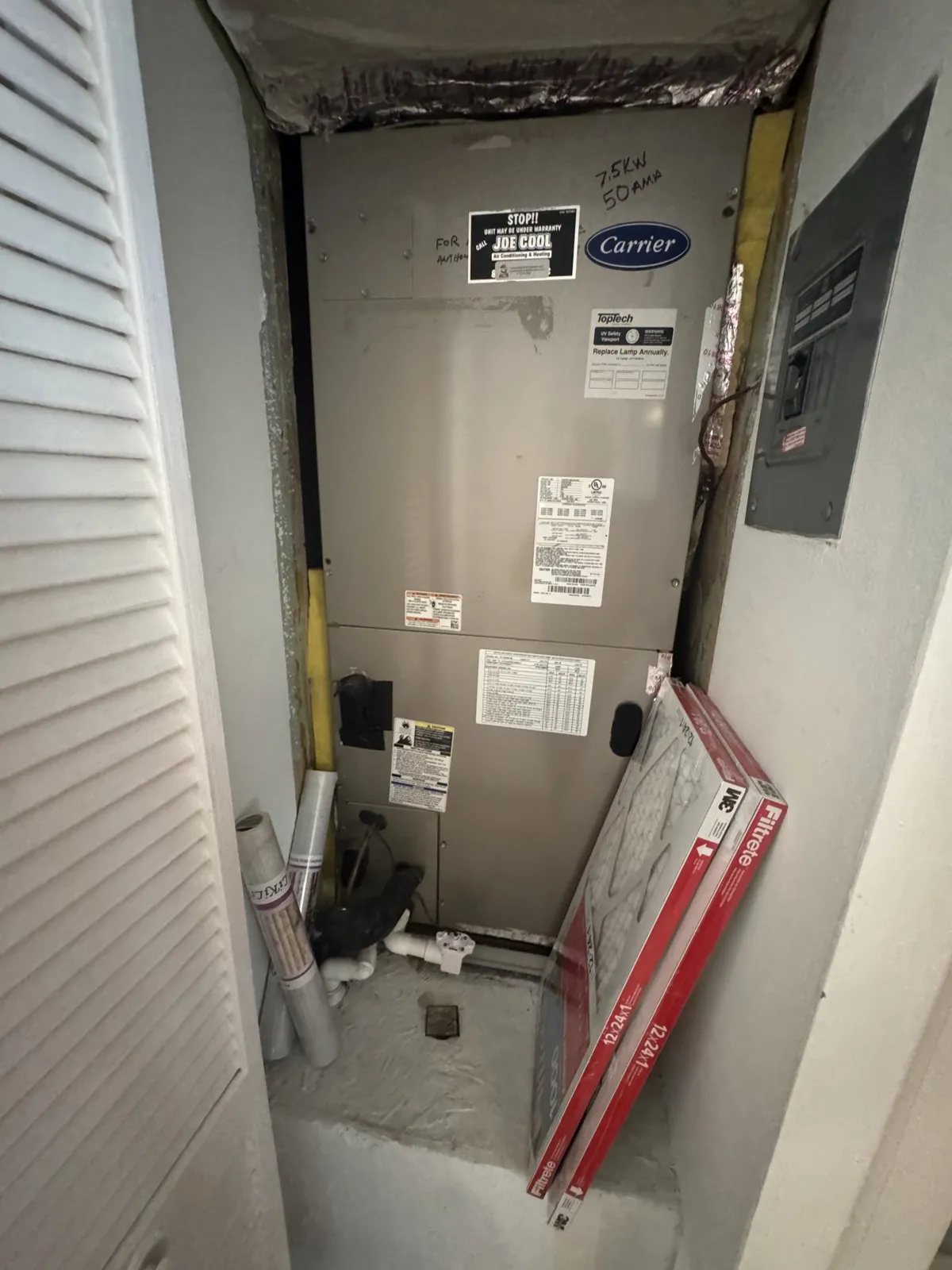
Why indoor air quality in Tampa, FL is its own subject
Four conditions stack here in a way they don't in most of the country:
- Nine months of high outdoor humidity, so every opened door imports moisture.
- Ductwork in unconditioned attics, so a leaky duct system pulls hot, damp attic air straight into what you breathe.
- Oversized air conditioners, extremely common, that cool fast, shut off, and never run long enough to dehumidify. The thermostat says 74°F and the house feels like a basement.
- Tightly built newer homes, which hold moisture and CO₂ better than older leaky ones, and therefore need deliberate ventilation.
Outdoor air quality has its own moments here — Saharan dust in summer, wildfire smoke, high pollen in spring — but for most households, indoor air is decided by moisture and by what the HVAC system is doing.
What actually improves the air, in order of value
- Find and fix the water. Roof, plumbing, window seals, condensate drain. Everything else is downstream of this.
- Get humidity into 30–50%. Right-sized equipment, sealed ducts, working bath and kitchen exhaust. A whole-home dehumidifier where the AC alone can't hold it.
- Filter sensibly. MERV 8–11 catches meaningfully more than a cheap fiberglass filter. Going to MERV 13+ on a system not designed for the pressure drop costs you airflow and works the blower harder — have static pressure measured before you upgrade.
- Seal the ducts. Attic air is not filtered air — see the ductwork section, and note that duct cleaning is a different job from sealing.
- Service the AC. A wet drain pan, a dirty evaporator coil and a slimy blower wheel are all air quality problems that live inside the machine.
- Ventilate on purpose. Run the bath fan during and after every shower. Use the range hood.
- Then consider add-ons. UV lamps, ionizers and purifiers can help at the margins. None of them fixes a wet wall cavity, and any of them sold as a cure for one is being oversold.
What's actually in the air inside a Florida home
The pollutants that matter here are unglamorous and mostly local:
- Mold spores. The dominant indoor air quality complaint in this climate, and the one most tied to humidity.
- Dust mite allergen. Thrives above 50% relative humidity. A common asthma and allergy trigger, and invisible.
- Pollen and outdoor particulate, pulled in through leaky returns and open doors.
- Volatile organic compounds (VOCs). New flooring, paint, cabinetry and furniture off-gas for months. A newly renovated home can test high and improve on its own.
- Carbon dioxide. Not a pollutant in the usual sense, but a reliable signal that fresh air isn't reaching the space.
For a homeowner with asthma or any respiratory condition in the house, the order of operations is the same as for everyone else — control moisture first, then filtration, then ventilation. What people usually do is the reverse, buying a device to clean the air inside a room while the thing that pollutes it keeps running behind the drywall.
The AC is the biggest air-quality appliance you own
It's the only system that moves every cubic foot of air in the house, repeatedly, nine months a year. Which means:
- A drain pan holding standing water is an incubator. If the air handler isn't level, the pan never dries between cycles — and that's also why some homes need the drain line cleared over and over.
- A dirty evaporator coil is a damp dust blanket in the airstream.
- Leaky return ducts pull in attic air, insulation fibers and whatever else is up there.
- An oversized system leaves the house humid no matter how low you set the thermostat.
Three of those four are found on a proper maintenance visit. The fourth is a sizing decision made years ago, and it's fixable at replacement time.
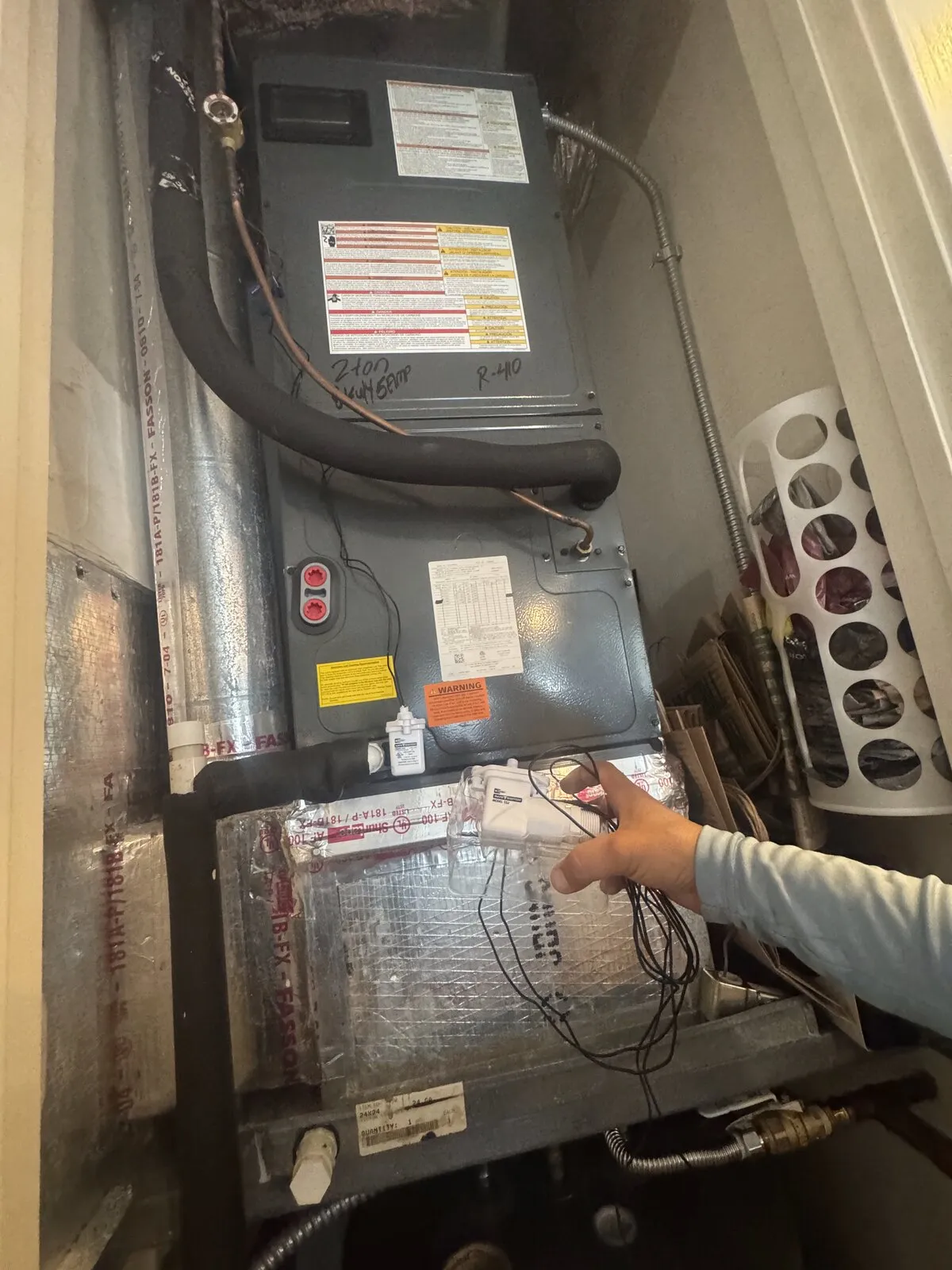
Where we'll be working
Wesley Chapel, Lutz, Land O' Lakes, Zephyrhills, Dade City, New Tampa, South Tampa and the surrounding Pasco and Hillsborough communities.
Indoor Air Quality in Tampa Bay: your questions, answered
How do I know if I have bad indoor air quality?
Musty odors, condensation on vents or windows, visible mold, symptoms that improve when you leave the house, and sustained indoor humidity above 60%.
Why is my indoor air quality so bad in Florida?
Usually humidity: an oversized or short-cycling AC, leaky attic ducts, insufficient exhaust ventilation, or water getting in somewhere.
How do I improve indoor air quality in my Tampa home?
Fix moisture first, hold humidity at 30–50%, use a MERV 8–11 filter, seal the ducts, service the AC, and ventilate deliberately. Add-on devices come last, if at all.
What are the common indoor air pollutants in Tampa homes?
Mold spores, dust mite allergens, fine particulate from outdoor air, and VOCs off-gassing from new flooring, paint and cabinetry.
Does an air purifier fix mold?
No. A purifier removes some airborne spores. Mold grows where there's water, and it keeps growing until the water stops.
Is a whole-home dehumidifier worth it in Florida?
In a home where the AC can't hold 50% — often an oversized system, or a very well-sealed newer build — yes, it solves a problem nothing else solves.
How much does indoor air quality testing cost in Tampa?
It depends on how many samples and which lab analyses. Ranges will be published when we open; start with a hygrometer either way.
Be first in line when we open in Tampa Bay!
Texts and messages get the fastest replies — leave your contact and you'll hear from us the day booking opens.
(813) 393-7911