
Indoor air quality testing measures what's actually in the air you breathe at home — mold spores, particulate matter, volatile organic compounds, carbon dioxide, and relative humidity. It's worth paying for when there's an unexplained musty odor, visible moisture damage, symptoms that improve when you leave the house, or after a water event. It is not worth paying for as a routine annual ritual, and in Tampa Bay a hygrometer that costs less than lunch answers the most important question for free.
Opening soon. Sunny City Cooling isn't booking jobs yet — this page is here to help you understand the work first. Join the launch list and we'll email you the day we open.
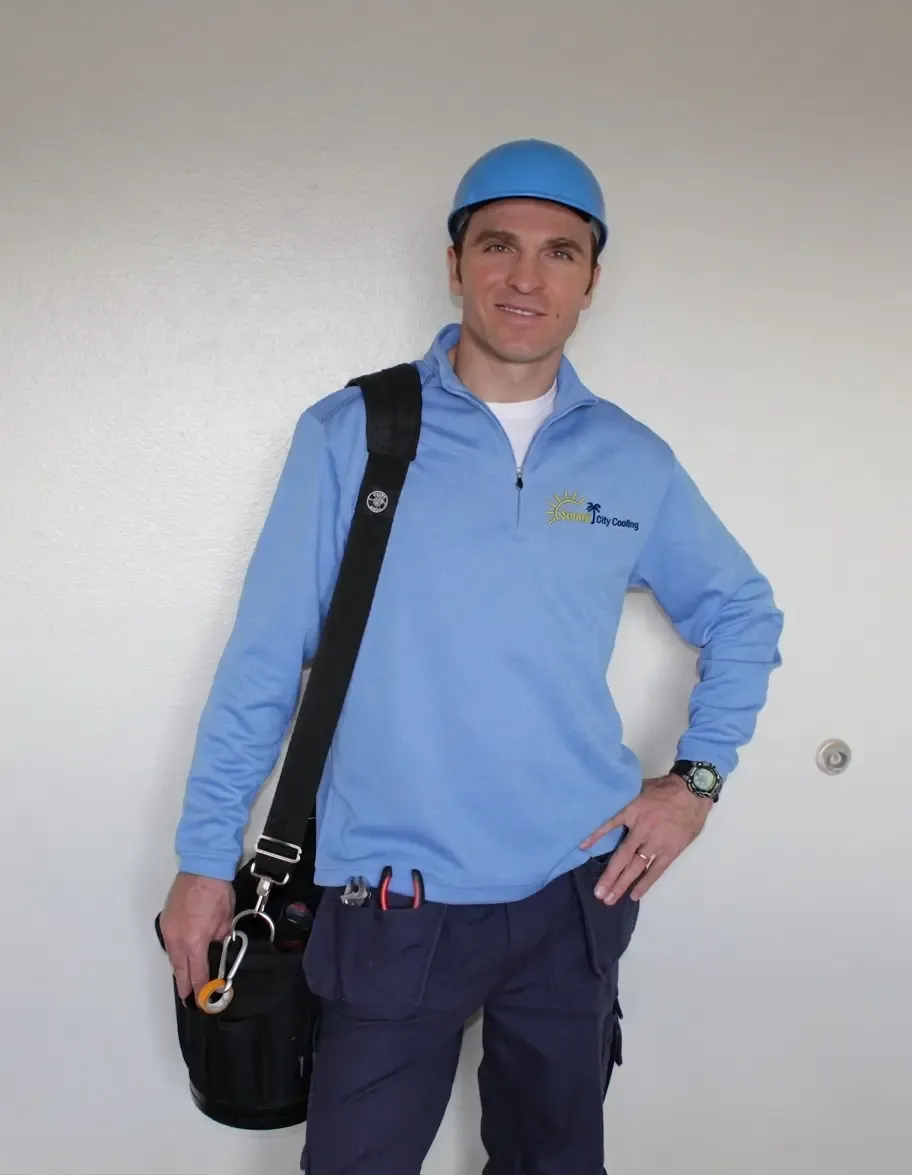
Sunny City Cooling technician — the hygrometer comes out of the truck first
Sunny City Cooling · Wesley Chapel, FL · more than 60 years of combined field experience on the team.
How do you know it's time for Air Quality Testing?
Check what you're seeing at home:
What one degree actually costs you
Rule of thumb for a Florida summer: each degree lower adds roughly 6–8% to cooling runtime.
Baseline is 78°F — the number Florida utilities use in their own summer guidance.
Cooling runtime vs 78°F
+15%
Two degrees below the baseline. Comfortable for most people, and the humidity still comes out.
The Florida problem is humidity, and humidity is measurable at home
Nearly every indoor air complaint in this climate traces back to moisture. Mold needs sustained humidity above roughly 60% to establish. Dust mites thrive in the same range. Musty smells are almost always biological growth somewhere damp.
Before you buy any testing, buy a hygrometer. Our team has more than 60 years of combined field experience, and that is still the first instrument out of the truck. Put it in the room that smells, and another in the main living area. Read them for a week.
| Indoor relative humidity | What it means |
|---|---|
| Below 30% | Rare in Florida — usually a badly oversized system in winter |
| 30–50% | The target range |
| 50–60% | Acceptable, watch it |
| Above 60% sustained | Mold risk. Something is wrong — investigate before you test the air |
That last row is the most useful line on this page. Sustained high indoor humidity in a house with a working AC usually means one of four things: a system so oversized it short-cycles and never dehumidifies, leaky ducts pulling in humid attic air, a ventilation problem, or water getting in somewhere.
What testing actually measures
- Airborne mold spores. Air samples from inside and a control sample from outside, compared in a lab. The comparison is the whole point — Florida outdoor air has plenty of spores, so an indoor count means nothing without the outdoor baseline.
- Surface sampling. Tape lifts or swabs where growth is visible, to identify species.
- Particulate matter (PM2.5). Fine particles from outdoor air, cooking, and smoke.
- VOCs. Off-gassing from new flooring, paint, cabinetry and furniture. Newly renovated homes often test high and improve over months.
- Carbon dioxide. A proxy for ventilation. High CO₂ means fresh air isn't reaching the space — a common finding in tightly built newer homes.
- Carbon monoxide. Rarer here with mostly electric equipment, but any combustion appliance makes it worth checking.
- Relative humidity and moisture mapping. Where the water is, which usually matters more than what grew because of it.
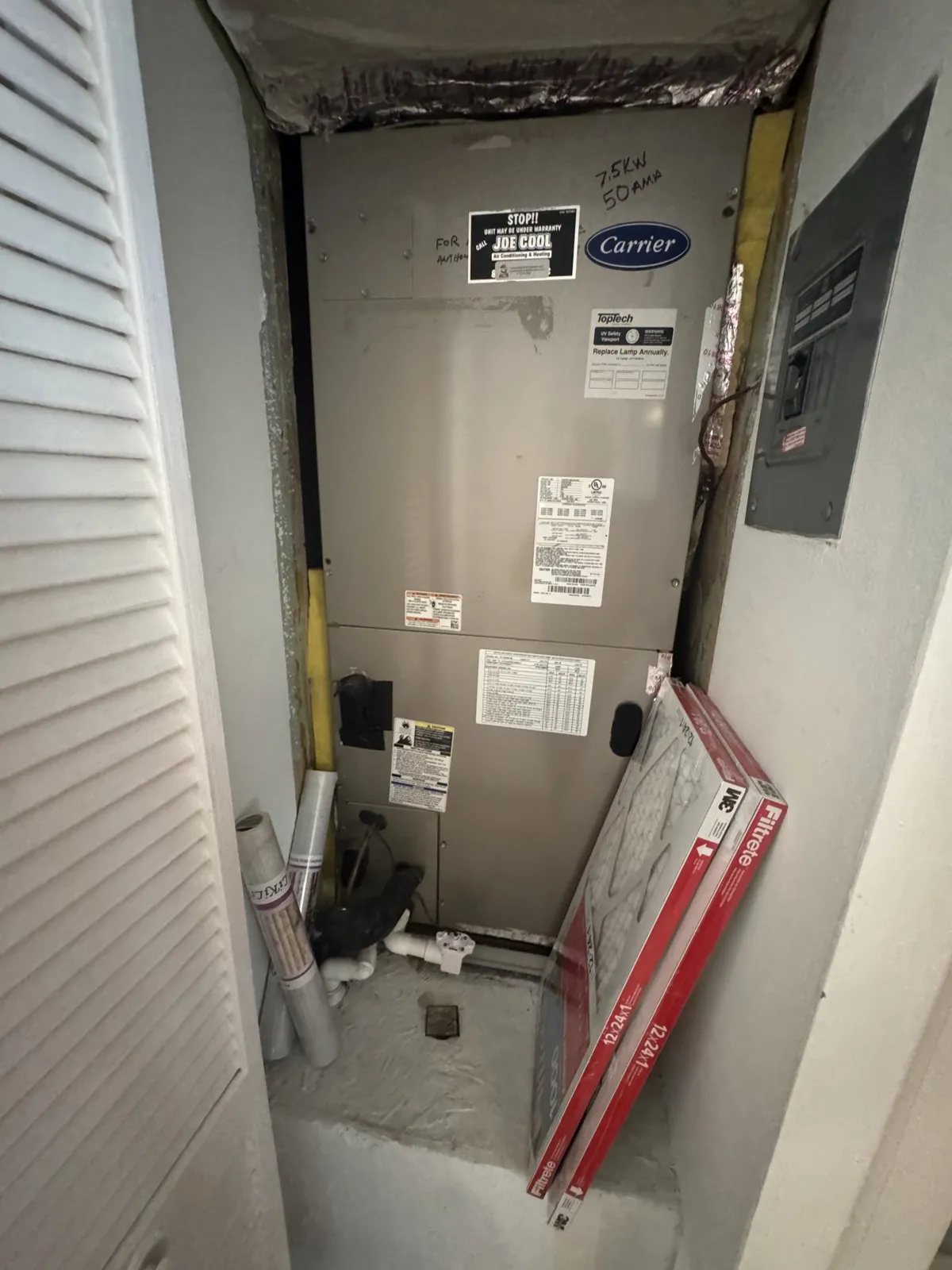
Testing, inspection and assessment are three different things
The words get used loosely, and the difference decides what you get for your money.
- Inspection — a visual walk of the home and the HVAC system looking for moisture, growth and the conditions that produce them. No lab, no samples.
- Assessment — inspection plus instruments: moisture meters, thermal imaging, humidity logging. An indoor air quality assessment tells you where the water is.
- Testing — air or surface samples sent to a laboratory. Tells you what is present, in what concentration, relative to a control.
Most homeowners who think they need testing actually need an assessment first. Finding the moisture is what changes the outcome; the lab result usually confirms what a competent assessment already located.
One note on older homes: if a property predates the late 1980s and you are planning demolition or remediation, asbestos is a separate testing question with its own rules, handled by a licensed abatement professional rather than by an HVAC contractor.
When testing is genuinely worth it
- A musty odor with no visible source
- Symptoms — congestion, headaches, irritated eyes, asthma flare-ups — that improve when you're away from the house and return when you come back
- After a roof leak, plumbing leak, or any flooding
- Before buying a home that smells wrong
- Visible growth where you want the species identified before remediation
- Clearance testing after remediation — the one case where testing is not optional. It's how you know the work succeeded.
When it isn't
- As a routine annual service with no symptom and no incident
- When you can already see mold and intend to remediate regardless. You don't need a lab to confirm what you're looking at; spend the money on fixing the moisture.
- As a substitute for finding the water. Testing tells you what's in the air. It doesn't tell you which pipe is leaking.
Reading a report without being sold to
A useful report includes the outdoor control sample alongside the indoor ones, spore counts by genus, the sampling locations and times, the lab's name and accreditation, and a plain-language interpretation that distinguishes "elevated relative to outdoor" from "present."
Two cautions. First, there are no federal exposure limits for indoor mold, so any report stating you exceed "the legal limit" is misrepresenting something. Second, watch who benefits: when the company that tests is also the company that remediates, the incentive is obvious. Independent testing followed by separate remediation is the cleaner arrangement, and any honest contractor will say so.
What to do about the air, in order of value
- Fix the moisture. Everything else is downstream.
- Get humidity into the 30–50% band. Correct AC sizing, sealed ducts, working bath and kitchen exhaust.
- Filter better, within reason. A MERV 8–11 filter catches meaningfully more than a cheap fiberglass one. Jumping to MERV 13+ on a system that wasn't designed for the pressure drop makes the blower work harder and can cost you airflow — check static pressure before you do it.
- Seal the ducts. Attic air is not filtered air — see ductwork. And if there is visible growth or debris in the ducts themselves, that is a duct cleaning job, not a testing job.
- Ventilate deliberately. Run bathroom fans during and after showers; use the kitchen hood.
- Then, if there's still a problem, test.
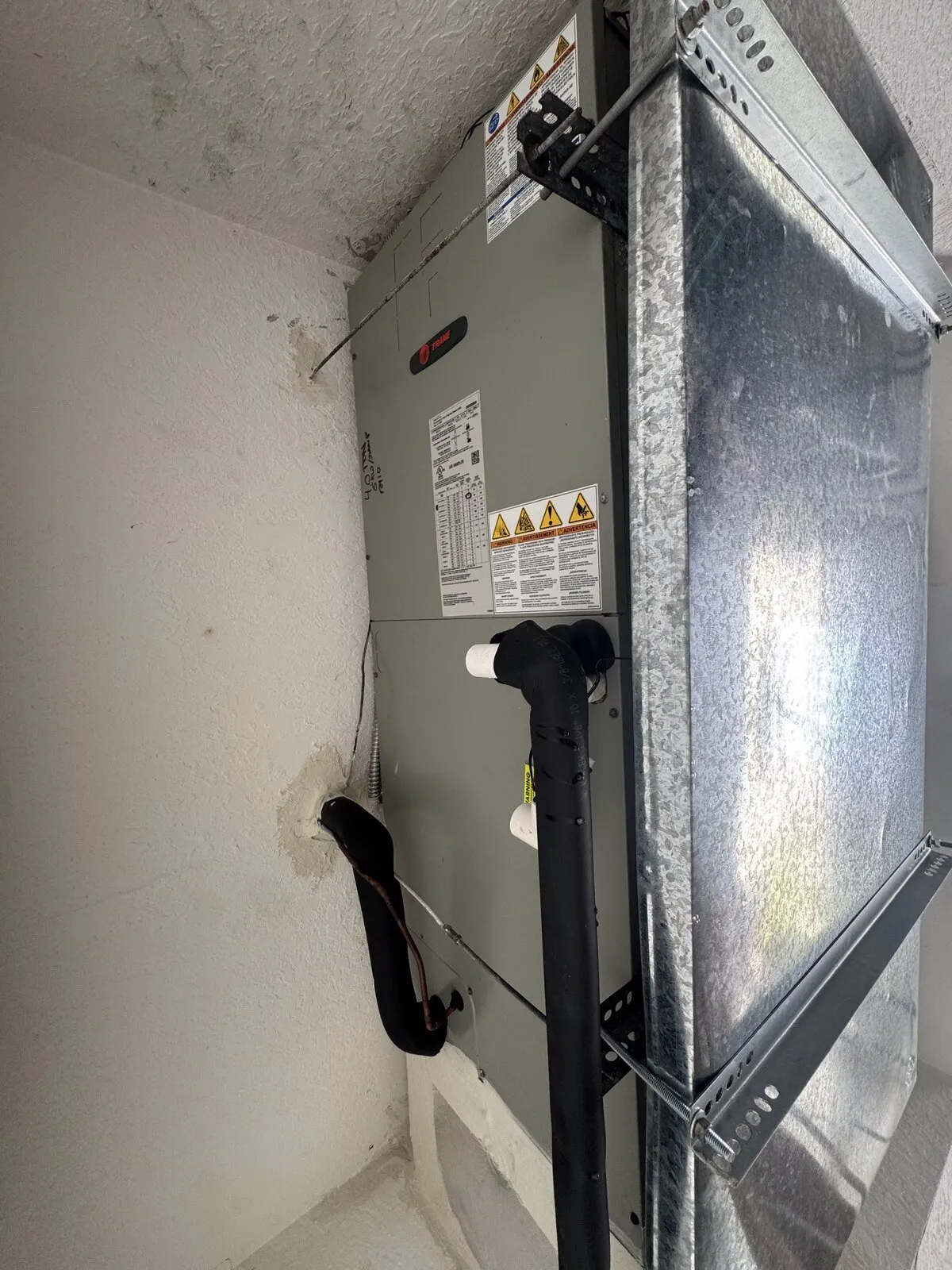
Where we'll be working
Wesley Chapel, Lutz, Land O' Lakes, Zephyrhills, Dade City, New Tampa, South Tampa and the surrounding Pasco and Hillsborough communities.
Air Quality Testing: your questions, answered
Are air quality tests worth it?
When there's a symptom, an odor, a water event, or remediation to verify — yes. As a routine purchase with nothing prompting it — usually not. Start with a hygrometer.
How do I test my house for air quality?
Start free: a hygrometer in two rooms for a week. If humidity stays above 60% or there's a persistent musty smell with no visible source, that's when professional sampling earns its price.
How much does indoor air quality testing cost in Tampa?
It depends on the number of samples and which lab analyses are ordered. We'll publish ranges when we open for booking.
Why is indoor air quality testing especially relevant in Tampa Bay?
Nine months of high outdoor humidity, air conditioning that runs almost year-round, and a lot of housing stock with ductwork in unconditioned attics. Moisture problems here are ordinary rather than exceptional.
What are the signs of poor indoor air quality?
Musty odors, condensation on windows or vents, visible mold, symptoms that ease when you leave the house, and sustained indoor humidity above 60%.
Can an air quality test tell me what I'm allergic to?
Not directly. Sampling identifies what allergen sources are present in the home — mold genera, dust mite allergen, particulate — and a compound like formaldehyde shows up in VOC testing. Matching that to your own sensitivity is a medical question for your doctor, not an HVAC one.
Does my AC affect indoor air quality?
Substantially. It's the only system that moves every cubic foot of air in your home, repeatedly. A dirty coil, a wet drain pan or leaky attic ducts all become air quality problems — which is why the coil and pan are on every maintenance visit.
Should the same company test and remediate?
It's cleaner if they don't. Independent testing removes the incentive to find more work than exists.
Be first in line when we open in Tampa Bay!
Texts and messages get the fastest replies — leave your contact and you'll hear from us the day booking opens.
(813) 393-7911