
Blog · Brand deep-dive
Carrier AC Installation & Maintenance in Tampa Bay: The Owner's Guide to the 2026 Lineup
Published September 7, 2026 · Sunny City Cooling · Independent Carrier specialists — we service Carrier equipment, we are not Carrier Inc.
Willis Carrier invented modern air conditioning in 1902, and his company still makes the most complete residential lineup on the market — which is exactly why "I have a Carrier" tells a technician almost nothing until the model number comes out. A Carrier system in Tampa Bay can be a budget single-stage Comfort 14, a salt-air-hardened Coastal two-stage, or a communicating Infinity flagship — three different machines with three different ownership manuals. This guide is the manual for all of them: what changed in the 2025–2026 lineup, what a proper installation includes, which maintenance actually keeps the warranty alive, and what all of it costs in this market, with sources.
Carrier is our flagship service brand. We're independent — no dealer quota, no commission on any box — so this guide can afford to be honest about the parts of Carrier ownership the brochures skip.
What changed in 2025: the R-454B switch, explained in one minute
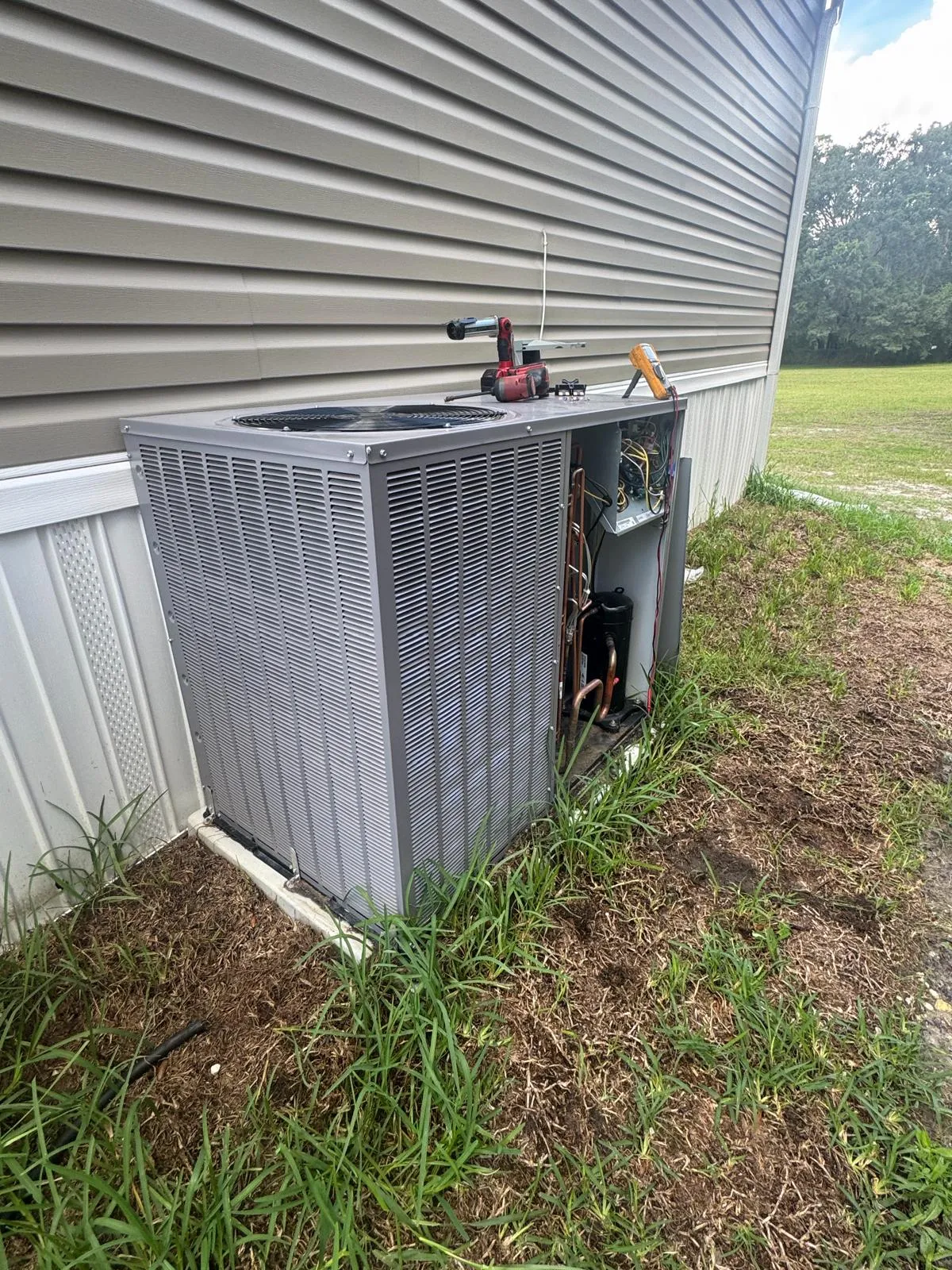
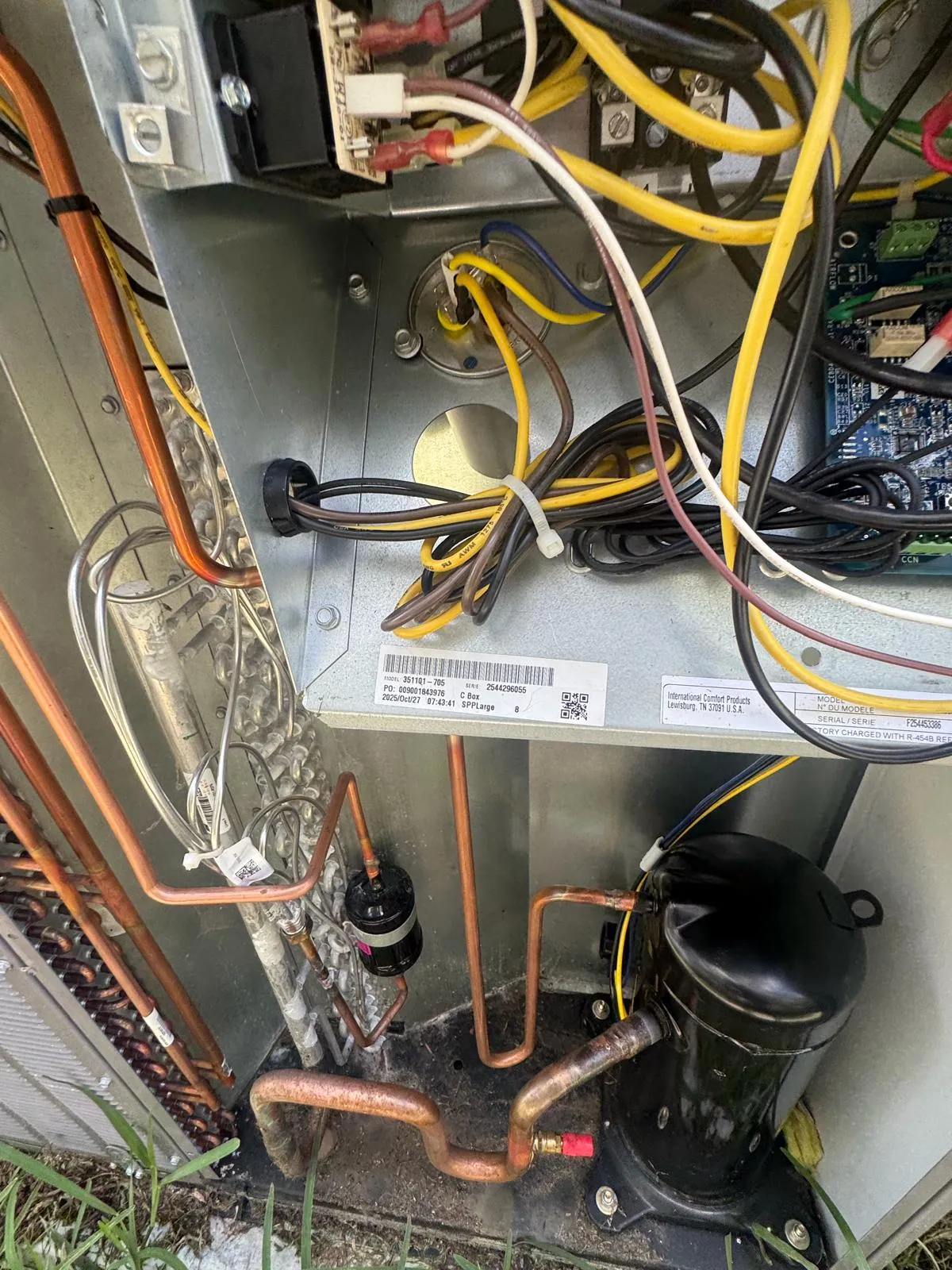
In 2025 Carrier moved its entire residential line to R-454B refrigerant, retiring the familiar 24-series (24VNA6 Infinity 26, 24VNA4, 24TPA7, 24SPA6, 24SCA5, 24SCA4 — all R-410A) and replacing it with the new 26-series air conditioners and 27-series heat pumps. For an owner, three practical consequences. A new Carrier system bought in 2026 is an R-454B system, full stop. An existing R-410A Carrier keeps working and keeps being repairable — but refrigerant-circuit repairs get gradually pricier as the R-410A phase-down tightens supply. And the two refrigerants don't mix: replacing a condenser usually means matching indoor equipment and often a new line set, which belongs in any honest replacement quote up front.
The 2026 central AC lineup: 26-series, tier by tier
Three tiers, one specialist note for our coastline. "Coastal" isn't marketing — it's corrosion protection on the condenser, and within a few miles of the bay it earns its premium.
| Model | Series | Compressor | SEER2 |
|---|---|---|---|
| 26VNA1 | Infinity 21 | Variable-speed (inverter) | up to 21 |
| 26TPA8 | Performance 18 | Two-stage | ~18 |
| 26TPA8***C | Performance 18 Coastal | Two-stage, coastal protection | ~18 |
| 26SPA6 | Performance 16 | Single-stage | ~16 |
| 26SCA5 | Comfort 16 | Single-stage | ~16 |
| 26SCA5***C | Comfort 16 Coastal | Single-stage, coastal version | ~16 |
| 26SCA4 | Comfort 14 | Single-stage, budget | ~14 |
Reading a Carrier model number: the first two digits are the series generation (26 = the R-454B air conditioners), the letters carry the tier — VNA is Infinity variable-speed, TPA two-stage Performance, SPA/SCA single-stage Performance/Comfort — and a trailing "C" marks the Coastal build. The manufacture date hides in the serial number: on most Carrier units the first four digits are week and year.
Heat pumps: for Florida, often the smarter Carrier
A heat pump is the same machine as an air conditioner running both directions, and in a climate with two weeks of real winter it's frequently the better buy — one system, no gas, and the 27-series covers every tier. The crossover units are the quiet news of the lineup: mini-split-style inverter outdoor units that drive ordinary ducted systems, bringing variable-speed efficiency to homes that already own good ductwork.
| Tier | Models | Note |
|---|---|---|
| Infinity | 27VNA3 (Infinity 23) · 27VNA1 (Infinity 21 Ultimate Cold Climate) · 27VNA0 (Infinity 20) | All inverter-driven variable-speed |
| Performance | 27VPA9 (Performance 19, inverter) · 27TPA8 & 27TPA8***C Coastal (two-stage) · 27SPA6 (single-stage) | The Coastal two-stage is a strong Tampa Bay fit |
| Comfort | 27SCA5 · 27SCA5***C Coastal | Value tier with a salt-air option |
| Crossovers | 37MUHA (Performance 19 Crossover) · 37MURA (Comfort 18 Compact) | Mini-split-style outdoor units that drive ordinary ducted systems |
The rest of the family, briefly. Ductless mini-splits: the single-zone Infinity 38MPRA flagship (up to 42 SEER), Performance 38MARB/38MAR single-zone and 38MGR multi-zone (up to 5 zones), 38MBR/38MBRB, and the Comfort 38MHRBQ heat pump / 38MHRBC cooling-only — paired with wall-mount (40MPHA/40MAQ/40MHHQ/40MHHC), cassette (40MBCQ), ducted (40MBDQ) and floor (40MBFQ) indoor units. Packaged rooftop-style units for homes without split systems: Performance 50VG/50VR/48VG/48VR and Comfort 50NP/50NL/50ZP, 50NH/50ZH/48NT, 48NL and 50NT. Carrier also builds geothermal systems and the commercial WeatherMaker/WeatherMaster rooftop line — different animals, same service trade.
Carrier by CPI: the value play worth asking about
One more name shows up on Tampa Bay quotes: Carrier by CPI — Carrier equipment produced under a CPI partner program, and in our view the best price-to-quality proposition currently wearing the Carrier badge. You get Carrier engineering and the Carrier parts ecosystem at a friendlier number than the flagship lines. The owner's homework doesn't change: confirm the exact model number on the quote, confirm who backs the warranty and where parts come from, and hold the installation to the same standard as any Infinity. We'll publish a fuller comparison as we install and service more of them — with photos from real Tampa Bay jobs on this page.
What a Carrier system costs, with sources
Installed prices by tier, from published national corridors (HomeGuide, September 2026; Carrier's own site quotes $3,000–$15,000+ for central systems). Tampa Bay tends to run above national: local published 3-ton corridors sit at $7,000–$10,500 for standard single-stage and $11,000–$15,000 for variable-speed (I Care Air Care, Pronto Service Pros, September 2026) — county permits, hurricane straps and Florida labor are in the number. Prices updated September 2026.
What a proper Carrier installation includes
The same premium unit runs beautifully after a careful install and dies young after a rushed one — Carrier's efficiency ratings assume an installation the market doesn't always supply. The checklist any Tampa Bay owner can hold an installer to: aManual J load calculation (sized to your house, not "same as the old one"); a county permit — in Florida that's law, not paperwork theater; a duct inspection, because a new system inherits every leak the old one fed; R-454B-ready tools and training, since the new refrigerant is A2L-classified and handled to a newer standard; and commissioning — refrigerant charge verified by measurement, airflow set, thermostat configured, and the numbers written down. On Infinity systems add one line item: a surge protector. Tampa is the lightning capital of the country, and a communicating board is the most expensive thing lightning can find in your backyard. The full plain-English version lives in ourAC installation service profile.
The Carrier AC installation process, step by step
Whether the truck says Sunny City Cooling, a local Carrier dealer, or anyone else, a professional AC installation follows the same seven steps — and knowing them is how you tell a real installer from a delivery team with gauges. One: an in-home evaluation with a load calculation, not a guess from the driveway. Two: equipment selection — matching tonnage, efficiency tier and budget, with the indoor and outdoor units chosen as a matched pair. Three: the county permit. Four: recovery and removal of the old air conditioner, with the refrigerant legally reclaimed. Five: setting the new indoor and outdoor units — new pad, hurricane straps, a correctly sized line set. Six: electrical wiring, the condensate drain and the thermostat. Seven: commissioning and a walkthrough — the installer shows you the numbers, the filter, the shutoffs, and how the warranty registration works. A straightforward replacement fits in one working day; ductwork or electrical surprises are what stretch it, and an honest quote says so up front. Done right, the payoff shows up twice: on the thermostat, and on summer energy bills, where a correctly charged high-SEER2 system finally delivers the seasonal energy efficiency ratio printed on its sticker.
Who should install it: a local Carrier dealer or an independent HVAC company?
A local Carrier dealer — the factory-authorized kind Carrier's own site helps you find — comes with real advantages: first access to the flagship lineup, factory promotions, and extra weight behind warranty claims. An independent HVAC company that installs and services Carrier equipment usually answers with sharper pricing and multi-brand honesty, because no quota rides on which box you pick. Both can be excellent; neither is automatically. What actually decides how the ac unit performs for fifteen years is the technician who does the professional installation — whether the truck says Carrier dealer or not.
So interview the installer, not the brochure. Ask how they'll determine the right size air conditioner for your home (the only correct answer contains the words "load calculation"), whether the quote includes a ductwork inspection, and what commissioning numbers you'll get in writing. A Carrier expert who measures is worth more to your energy efficiency — and to how much cool air actually reaches the far bedroom — than any efficiency sticker on a high-efficiency system installed by guesswork. That, not the logo on the shirt, is what buys a homeowner peace of mind.
The five installation mistakes that grow mold in Florida homes
Here's the part of the seven steps that brochures never explain: most "mysterious" humidity, musty smells and mold problems in air-conditioned Florida homes trace back to one of five installation-day decisions. Each one starts as a shortcut, turns into a moisture problem, and ends as a biology problem. Every one of them is checkable by an owner without tools — and every one is cheaper to catch at the final walkthrough than two summers later.
1The evaporator (air handler) is not set level
Condensate is supposed to run downhill into the drain pan and out the drain line. On a unit that isn't level, water pools in the pan instead of draining — and standing water in a dark, warm cabinet is a petri dish. The slime it grows clogs the drain line again and again, the pan stays wet between cycles, and that moisture evaporates back into your air every time the blower starts. The house reads it as humidity you can't explain; your nose reads it as a musty smell.
How to check it yourself: Put a small level on top of the air handler, and look into the drain pan a day after the system last ran — it should be dry, not holding a puddle.
2The air handler closet has a solid door and no return grille
A central system must pull back as much air as it pushes out. Close it in a closet behind a solid door with no louver, and it suffocates: airflow drops, the coil runs colder and wetter than designed, the house never really dehumidifies, and the starved system pulls humid attic and wall-cavity air through every crack it can find. Weak cooling plus chronic dampness is exactly the recipe mold is waiting for.
How to check it yourself: The closet door should have a louver or a proper return grille sized for the system — and cooling should NOT noticeably improve when you leave that door open. If it does, the return is starved.
3The outdoor unit cannot breathe
The condenser's whole job is dumping your home's heat into outside air, and it needs free, unobstructed airflow to do it — fences, shrubs, enclosures and garage installs without ventilation make it re-inhale its own hot exhaust. Head pressure climbs, the compressor overheats and protects itself, capacity quietly drops. A system at partial capacity runs longer yet removes less moisture, so the house grows damper every summer — and the story usually ends with a cooked compressor, the most expensive part on the machine.
How to check it yourself: Walk around the outdoor unit: roughly two feet of clear space on the sides and open sky above. The air blowing out the top should escape freely, not bounce back off a wall, deck or hedge.
4Ducts sized by guesswork, zoning drawn by habit
Air ducts that are too small choke the system with static pressure; branches balanced by habit instead of a Manual D calculation starve some rooms and flood others. The result shows up as a house that never agrees with itself — moisture collecting in the starved room while the over-served one runs cold — and the damp room is where mold plants its flag first, usually in a closet against an exterior wall.
How to check it yourself: Rooms that never match the thermostat, doors that whistle when closed, and a supply register you can barely feel are all duct-sizing symptoms — the fix is measuring airflow, not lowering the setpoint.
5The system is simply too big for the house
Florida's favorite installation mistake. An oversized air conditioner blasts the temperature down and shuts off before it has run long enough to wring moisture out of the air. The thermostat is satisfied; the humidity isn't. Cold-and-clammy is the exact climate mold prefers — which is why the cure for a damp house is a load calculation, not a bigger unit.
How to check it yourself: Short cooling cycles (a few minutes on, off, on again) and indoor humidity that stays above 55–60% even when it's cool are the classic oversizing signature.
None of these five is a Carrier problem — the same physics ruins a Trane or a Goodman identically. But a premium Carrier quote is exactly where you're entitled to demand premium installation discipline: a level, a louvered door, breathing room outside, a Manual D duct plan and a Manual J size. The unit is only as good as those five decisions.
How to get rid of mold in your home when you have a Carrier air conditioner
Short answer: fix the water first, then clean, then make the system dry the house. Mold needs moisture, warmth and food; a Florida home supplies the last two automatically, so the only variable you control is moisture — and the air conditioner is your main dehumidifier. Four moves, in order:
1Find the moisture source first
Mold in an air-conditioned home is a moisture symptom, not a brand defect — a Carrier badge neither causes nor prevents it. Work the checklist above (level, return air, condenser breathing room, ducts, sizing), then add the maintenance pair: a dirty evaporator coil and a clogged drain line, the two most common growers. Until the water problem is found, any cleaning is temporary.
2Clean what can be cleaned — properly
Visible spots on supply vents wipe off with detergent; that part is cosmetic. The real work is behind the filter: a professional evaporator coil cleaning, a drain pan and drain line flush, and a look at the blower wheel, which in Florida humidity packs with exactly the grime mold feeds on. What NOT to do: spray bleach into ducts or run 'ozone treatments' at the smell — if flexible ductwork itself is moldy inside, the honest fix is replacing those runs, not perfuming them.
3Set the system to dry the house, not just cool it
Run the fan on AUTO, not ON — with the fan always on, the water still sitting on the coil after each cycle re-evaporates straight back into your rooms. Aim for indoor humidity of 45–55% (a $15 hygrometer keeps everyone honest). On Infinity systems, use the wall control's dehumidify setting — the variable-speed compressor can slow down and wring air properly, which is the one genuine brand advantage Carrier owners hold in this fight. A UV lamp at the coil helps keep the wet zone from re-growing — after the causes are fixed, never instead of fixing them.
4Know when it stopped being an AC problem
A musty smell that starts with cooling season points at the system. Spots on walls, ceilings or closet corners point at the house — leaks, ventilation, or the humidity the system was never able to remove. Health matters too: recurring allergy or asthma flare-ups indoors are a reason to act this week, not this quarter. Persistent visible growth across rooms is mold-remediation territory, and an honest AC company says so instead of selling another coil cleaning.
Maintenance that keeps a Carrier warranty alive
Carrier's parts warranty runs about 10 years — if the unit is registered within 90 days and, per the fine print, maintained by a professional with records to show. In practice that means twice-a-year service in this climate: a Florida system runs roughly double the national hours. What the visit must actually cover is published on this site as the 21-point checklist — coil cleaning matters double within salt range of the bay (rinse the outdoor coil, even on Coastal models), drain lines grow algae here faster than anywhere north, and on Infinity systems the tune-up includes checking control-board diagnostics, not just capacitor values. Between visits the owner's share is the60-second stuff: filters monthly in summer, and a glance at the outdoor unit after every named storm.
What tends to fail, and when: the service-life map
Not lab statistics — the working typology our trade sees on Carrier and every other major brand, laid on a timeline. Single-stage systems carry fewer parts that can fail but lose more efficiency; variable-speed systems run gentler and quieter but put a four-figure board and inverter in the failure pool. That trade-off, not the logo, is the real reliability decision.
Years 0–5
Warranty housekeeping
Register within 90 days, keep maintenance records — Carrier warranty terms lean on both. Failures are rare and usually installation-related.
Years 5–10
Capacitors & contactors
The classic Florida summer casualties on every brand, Carrier included — inexpensive parts, quick fixes.
Years 10–15
Motors, boards, coils
Fan motors and control boards enter the picture; on Infinity systems, surge-damaged boards are the expensive version of this stage.
Years 15+
The replacement math
Compressor or evaporator failures meet the 40% rule — at this age, price the new 26-series against any four-figure repair.
Carrier parts, explained for owners
When a repair quote lands, it names a part — and most owners have never heard of any of them. This table is the translation layer: what each part actually does, what its failure looks like from the couch, and the honest Tampa Bay market corridor for the repair (published local repair pricing, September 2026). Corridors, not promises: the exact number depends on tonnage, tier and access.
| Part | What it does | What failure looks like | Market corridor |
|---|---|---|---|
| Run capacitor | Gives the compressor and fan motors their starting push | Outdoor unit hums but won't start; fan needs a stick-push to spin | $150–$450 installed |
| Contactor | The relay that switches the outdoor unit on and off | AC never starts — or never stops; chattering click at the unit | $150–$450 installed |
| Condenser fan motor | Pulls air across the outdoor coil to dump heat | Humming, slow or dead outdoor fan; breaker trips on hot afternoons | $450–$1,400 installed |
| Blower motor (ECM) | Moves the air through your ducts | Weak airflow, whining from the air handler, rising bills | $450–$1,400 installed |
| Control board (Comfort/Performance) | Sequences fans, compressor and safeties | Random no-starts, blinking fault codes | $450–$1,400 installed |
| Infinity communicating board | Runs the variable-speed conversation between all components | System offline after a storm; wall control errors | High end of the board range — surge protection is the cheap insurance |
| TXV / expansion valve | Meters refrigerant into the evaporator coil | Poor cooling with correct charge; icing; hissing at the coil | $450–$1,400 installed |
| Evaporator coil | The cold heart — absorbs heat and wrings out humidity | Refrigerant leaks (oily residue), ice, falling performance | $1,200–$5,500 installed |
| Compressor | The pump that moves refrigerant — the most expensive part | Hard electrical failures, grinding, tripped breakers | $1,200–$5,500 installed — where the 40% rule earns its keep |
Carrier's parts ecosystem is a real ownership advantage: OEM components ship under the Factory Authorized Parts label and fit Bryant and Payne siblings too, while Totaline — Carrier's own universal-parts brand — covers the commodity items. In practice that means capacitors, contactors and standard motors are stocked all over Tampa Bay, and repairs on Comfort and Performance systems rarely wait on shipping.
The line to respect: commodity electrical parts can be quality universals, but control boards, communicating Infinity components and anything inside the refrigerant circuit should be OEM — a generic board that 'mostly works' costs more in callbacks than it saves. And remember the warranty split: Carrier's registered 10-year warranty covers the PART, not the labor to install it — which is why the labor side of a quote deserves as much attention as the part number. Market corridors above are from published Tampa Bay repair pricing, September 2026.
Carrier, street by street: why the ZIP code changes the advice
The same 26-series behaves differently across ourservice area. Within salt range in St. Petersburg or South Tampa, the Coastal variants and yearly coil care stop being optional. In the new-build corridors of Wesley Chapel, Land O' Lakes and Riverview, whole streets of builder-grade systems age out together — which is exactly when a Carrier by CPI or Comfort-tier replacement quote should be compared, in writing, against the repair. Out in Dade City's frost pockets, the 27-series heat pumps earn their keep on the heating side too. And everywhere in Tampa Bay, the lightning-season advice is identical: surge protection first, especially under an Infinity nameplate.
Carrier questions owners actually ask
How much does it cost to install a Carrier AC unit?
By tier, installed (HomeGuide national corridors, September 2026): Comfort $3,000–$8,000, Performance $5,000–$10,000, Infinity $8,000–$15,000+; Carrier's own site quotes $3,000–$15,000+ for central systems and $2,000–$10,500 for mini-splits. Tampa Bay runs higher than national — local published 3-ton corridors sit around $7,000–$10,500 standard and $11,000–$15,000 variable-speed (I Care Air Care, Pronto Service Pros, Sept 2026) — because county permits, hurricane straps and Florida labor are in the price.
What is the $5,000 rule for AC repair versus replacement?
Multiply the system's age by the repair quote: over $5,000, price a replacement too. A $600 repair on a 10-year-old unit scores 6,000 — worth both estimates in writing. It pairs with the 40% rule: when a repair exceeds about 40% of replacement cost, demand both numbers. On pre-2025 Carrier systems add one more factor — R-410A refrigerant repairs get more expensive every year as the phase-down tightens supply.
What are common Carrier AC problems?
By age, the pattern looks like every major brand: capacitors and contactors in the 5–10 year window, fan motors and boards from 10–15. The Carrier-specific notes: Infinity communicating boards are sensitive to Florida lightning — a $150–$300 surge protector is cheap insurance on a $15,000 system — and the Comfort series shares parts so widely that repairs stay fast and inexpensive. None of this is a defect list; it's what the service trade actually sees.
Which is better, Carrier or Trane?
Both are premium-tier, and reliability surveys of the Consumer Reports kind put them within a few points of each other. The honest differences: Trane's Spine Fin aluminum coils resist coastal corrosion by design, while Carrier answers with dedicated Coastal variants (26TPA8***C, 26SCA5***C); Carrier's lineup is broader at every price point. The installer gap matters more than this brand gap — a well-installed either beats a badly installed both.
Can I install a Carrier air conditioner myself?
No — and not only because it's a bad idea. Florida requires a licensed contractor and a county permit for AC replacement, the refrigerant circuit legally requires EPA Section 608 certification, and the new R-454B units add an A2L-classified refrigerant that demands updated tools and handling training. DIY also voids the manufacturer warranty. The homeowner's real job is the checklist: load calculation, permit, commissioning report.
How long does a Carrier AC installation take?
A straightforward like-for-like replacement is one working day — roughly 4 to 8 hours. Add time when the job includes duct repairs, a line-set replacement (common in the R-410A → R-454B transition), electrical upgrades, or an air-handler relocation. A multi-day quote on a simple swap deserves a question; a one-hour quote deserves a bigger one.
Why does my Carrier AC smell musty when it turns on?
That first-blast musty smell is almost always moisture biology in the air path — a wet evaporator coil, a drain pan that never dries, or a slimed drain line — not a refrigerant or brand issue. Check the basics from the installation-mistakes list above (is the pan draining, is the fan on AUTO rather than ON), then have the coil, pan and blower wheel professionally cleaned. If the smell survives a real cleaning, the moisture source is still there: airflow, drainage or an oversized system that never runs long enough to dry the house.
Are Carrier parts expensive or hard to get?
Neither, by premium-brand standards. Commodity parts — capacitors, contactors, standard motors — are stocked across Tampa Bay under Carrier's Factory Authorized Parts and Totaline labels, and most Comfort/Performance repairs finish the same visit. The expensive tier is Infinity: communicating boards and variable-speed components are OEM-only and worth protecting with a surge protector. Remember the warranty split — the registered 10-year warranty covers the part, not the labor.
Keep reading: every brand we service has an owner profile on the brands page, the installation andmaintenance profiles explain the work itself, and the Learn hub carries the 60-second troubleshooting checks for the day something buzzes.
Be first in line when we open in Tampa Bay!
Texts and messages get the fastest replies — leave your contact and you'll hear from us the day booking opens.
(813) 393-7911